

📣 Create Blog for Traders!
Stop Watching news - Start Making it.
START



The Oracle Warning: Why Big Tech’s AI Spending Spree is Under Fire
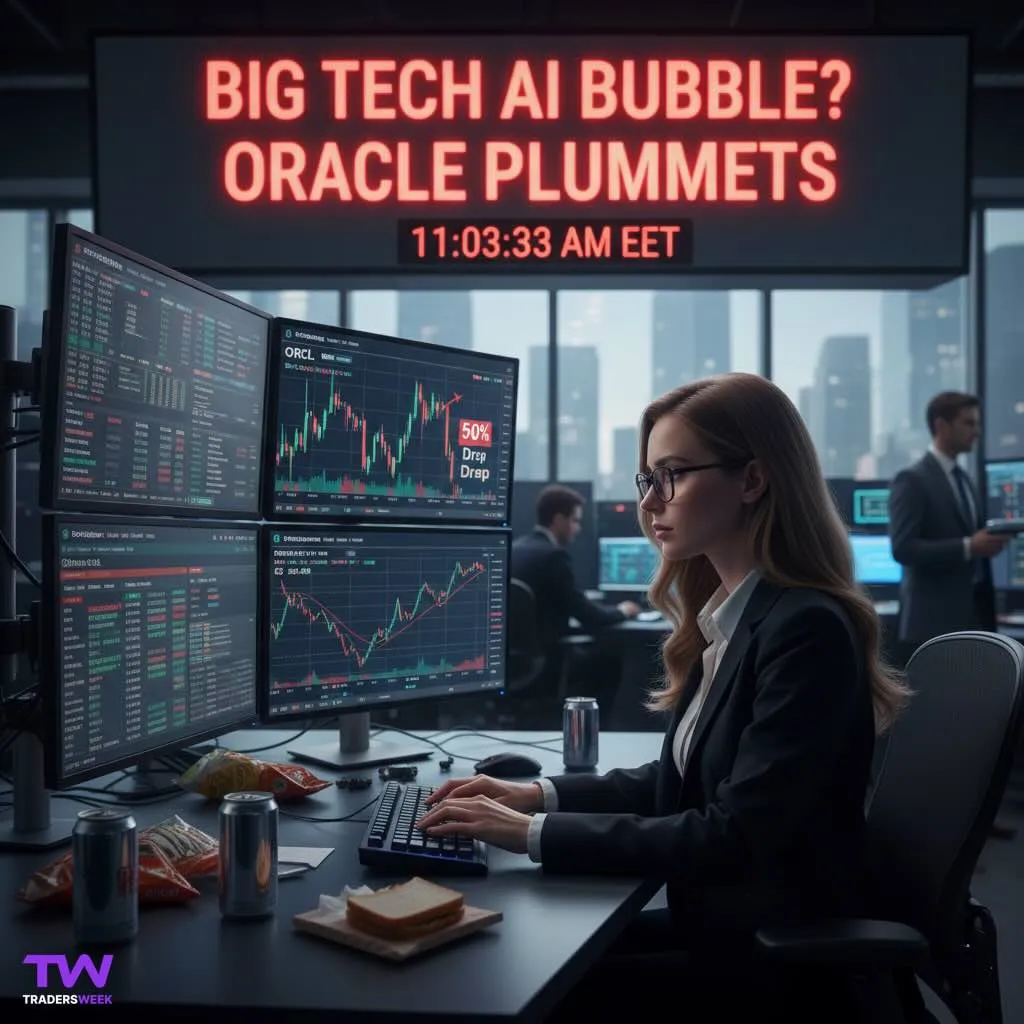
The honeymoon phase of Artificial Intelligence on Wall Street has officially ended. As of early 2026, the market is witnessing a significant rotation out of high-growth tech, led by a dramatic correction in Oracle (ORCL).
Risk Disclaimer: Trading financial instruments involves significant risk. The following analysis is for educational purposes only and does not constitute financial advice. Statistics show that over 80% of retail day traders lose money over a 12-month period.
The primary driver behind the Oracle sell-off isn't a lack of innovation, but a crisis of Debt-to-AI conversion. While the company aggressively expanded its OCI (Oracle Cloud Infrastructure), the cost of capital in 2025-2026 has made massive debt loads unsustainable.
Featured Snippet Answer: Investors are fleeing Oracle due to a 50% drawdown triggered by skyrocketing corporate debt and diminishing returns on AI infrastructure investments. This "AI Fatigue" suggests that Big Tech companies over-leveraged themselves during the 2024-2025 hype cycle, leading to a valuation reset as free cash flow fails to cover rising interest payments.
Professional traders using platforms like TradingView have noted a correlation between Oracle's Capex-to-Revenue ratio and other industry giants.
- Microsoft (MSFT): Continues to spend billions on Azure AI.
- Alphabet (GOOGL): Facing margin pressure from Gemini integration costs.
Experience Note: In my own trading during the Q4 2025 earnings season, I observed a "Sell the News" pattern even on positive earnings beats. For example, when ORCL reported a 15% growth in cloud revenue, the stock still dropped 4% intraday because the Capital Expenditures (CAPEX) guidance was revised upwards. This signals that the market no longer rewards growth at any cost—it demands profitability.
According to recent SEC filings, Oracle's long-term debt has reached levels that concern even the most optimistic bulls. When we look at the Interest Coverage Ratio, it's clear that if the federal funds rate remains elevated through 2026, refinancing this debt will be increasingly expensive.
If you are monitoring these moves on MetaTrader 5, consider the following technical indicators:
- 200-Day Moving Average: A clean break below this level on ORCL was the first signal of a structural trend change.
- Relative Strength Index (RSI): Oversold conditions below 30 have historically provided "dead cat bounces," but in a secular bear move, these are traps for liquidity.
Q: Is the AI bubble officially over? A: It's a transition from "hype" to "utility." Companies that can't monetize AI while maintaining healthy balance sheets (like Oracle in early '26) are being punished.
Q: Should I short other Big Tech stocks? A: Shorting involves unlimited risk. Professional traders often use Put Options to hedge their portfolios rather than naked shorting in a volatile AI sector.
#OracleStock #ORCL #BigTech2026 #AIbubble #StockMarketCorrection #TechStocks #Investing
Andy ₿.