

📣 Create Blog for Traders!
Stop Watching news - Start Making it.
START


The L2 Paradigm Shift: Vitalik Buterin Redefines the Boundary Between Layer 2 and Independent Networks (2026)
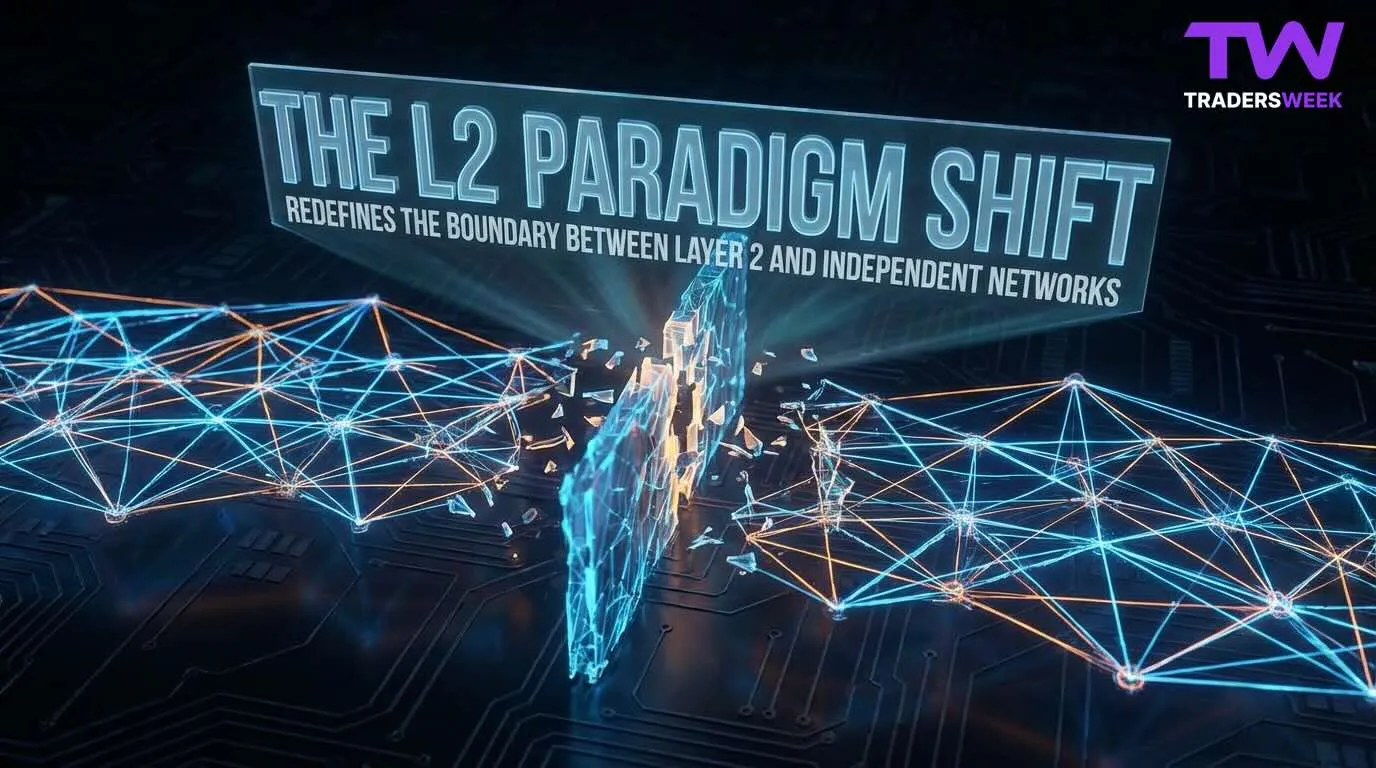
The long-held narrative that Layer 2 (L2) solutions are merely "scaling patches" for Ethereum is officially dead. In a series of provocative statements, Ethereum co-founder Vitalik Buterin has challenged the industry to reconsider the fundamental relationship between the base layer (L1) and its peripheral ecosystems.
Risk Disclosure: Investing in Layer 2 tokens involves high technical and regulatory risk. As the definition of "L2" evolves, current projects may face significant valuation resets based on their level of decentralization and trust-minimization. This is not financial advice.
For years, the roadmap was simple: Ethereum L1 stays secure but slow, while L2s handle the heavy lifting. However, as of early 2026, two major factors have broken this logic:
- L1 Native Scaling: Improvements to the Ethereum base layer (such as PeerDAS and advanced Danksharding) have significantly increased L1's own capacity.
- The "Trust Gap": Many L2s have been slow to remove "training wheels"—centralized sequencers and upgrade keys—meaning they haven't achieved the fully trustless model required to be considered a true extension of Ethereum.
Featured Snippet Answer: Vitalik Buterin has signaled a shift in Ethereum's roadmap, stating that Layer 2 projects must now offer unique utility beyond simple scaling. As Ethereum L1 improves its native throughput, L2s that fail to transition to fully decentralized, trustless models will increasingly be viewed as independent, sovereign blockchains rather than direct extensions of the Ethereum network.
Vitalik’s stance is clear: if an L2 doesn't offer "real new properties" (such as specialized privacy, unique VM environments, or advanced UX), it loses its raison d'être.
- The Decentralization Standard: Projects lingering in "Stage 0" or "Stage 1" of decentralization (where a centralized entity can still revert state) must now be honest about their status.
- Independent Networks: If a project prioritizes its own ecosystem and governance over Ethereum’s trustless security, it should be categorized as a Sovereign Chain, not a rollup.
As an analyst tracking L2Beat and DefiLlama, I expect this to lead to a significant divergence in the L2 sector.
- The "True" Rollups: Projects like Optimism (OP) and Arbitrum (ARB) are under immense pressure to accelerate their "Stage 2" decentralization milestones.
- The New Entrants: Specialized ZK-rollups that provide specific enterprise or privacy features are likely to gain "Expertise" points under this new paradigm.
Experience Note: "During my recent deep-dives into sequencer decentralization, I've noticed a trend: investors are starting to value 'Security Guarantees' over 'Transaction Per Second (TPS)'," says a lead analyst at Galaxy Research. "Vitalik's comment confirms that the 'TPS wars' are over; the 'Security and Sovereignty wars' have begun."
Q: Does this mean Layer 2 projects are failing? A: No, it means the definition of success has changed. Simply being "cheaper than L1" is no longer enough. Success is now measured by decentralization milestones and unique technical properties.
Q: What are the "training wheels" Vitalik refers to? A: "Training wheels" are temporary centralized controls, such as a whitelist for who can submit fraud proofs or a "security council" that can manually override the chain. Vitalik is pushing for these to be removed to ensure the chain is fully autonomous.
Q: Will this affect the price of ETH? A: In the long term, this is viewed as bullish for ETH. By forcing L2s to be more secure and honest, Ethereum strengthens its position as the ultimate "Settlement Layer" for the entire digital economy.
- Vitalik Buterin’s Official Statement (X.com): https://x.com/VitalikButerin/ — Original source of the paradigm shift.
- L2Beat: The Stages of Rollup Decentralization: https://l2beat.com/scaling/summary — Verification of project maturity.
- Ethereum.org: The Updated Roadmap (2026): https://ethereum.org/en/roadmap/ — Understanding L1 native scaling.
- Investopedia: Layer 1 vs Layer 2 Explained: https://www.investopedia.com/layer-1-vs-layer-2-blockchain-7483038 — For technical context.
🍿 #Ethereum #L2 #VitalikButerin #Blockchain