

📣 Create Blog for Traders!
Stop Watching news - Start Making it.
START


Tokenized Gold Market Cap Surges Past $6 Billion: XAUT vs. PAXG
By Digital Assets Strategy Team | Last Updated: February 13, 2026
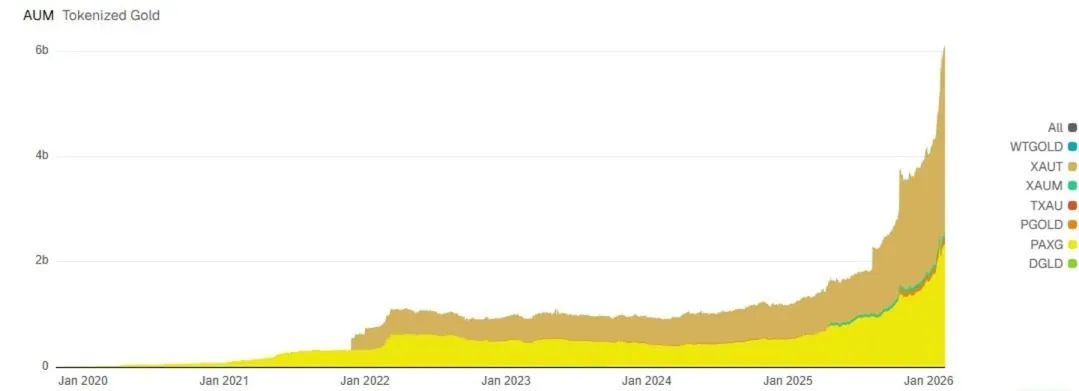
The intersection of physical safe-haven assets and blockchain technology is experiencing explosive growth. Driven by macroeconomic uncertainty and the maturation of Real-World Assets (RWA), the tokenized gold market capitalization has officially exceeded $6 billion. Notably, it has added over $2 billion since the beginning of the year, signaling a massive influx of institutional and retail capital.
However, this market is far from diverse. It is currently a duopoly, with Tether Gold (XAUT) and Paxos Gold (PAXG) commanding a staggering 96.7% of the total market share. What is driving this concentration, and how can modern traders leverage these assets?
Risk Disclosure: Trading tokenized commodities involves significant risks, including smart contract vulnerabilities, liquidity fragmentation, and counterparty risks associated with the centralized custodians holding the physical gold. Always verify the issuer's reserve audits before allocating capital.
What is Tokenized Gold? Tokenized gold is a digital asset on a blockchain representing ownership of physical gold securely stored in a vault. As of early 2026, the tokenized gold market cap exceeds $6 billion, offering investors fractional ownership, 24/7 global trading, and the ability to use physical gold as collateral in decentralized finance (DeFi) protocols without the high storage fees of traditional bullion.
The recent $2 billion surge is primarily driven by three factors:
- DeFi Yields: Traders are no longer content with gold just "sitting there." They want yield.
- Geopolitical Hedging: Investors are seeking assets outside traditional banking systems while retaining underlying physical value.
- Liquidity: Unlike physical bars, digital gold can be transferred across the globe in seconds.
Why do two tokens control 96.7% of a $6 billion market? The answer lies in the "Lindey Effect"—the longer an asset survives and maintains its peg, the more trust it garners. Both Tether and Paxos have proven their resilience through multiple crypto bear markets.
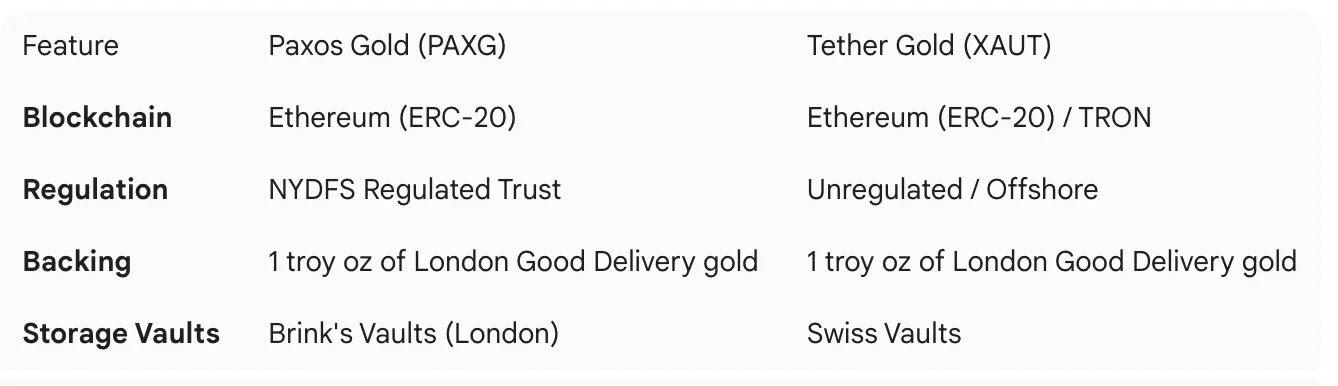
Expert Insight: While PAXG appeals heavily to US-based institutions due to strict NYDFS oversight, XAUT dominates the Asian and offshore markets, leveraging the deep liquidity networks already established by Tether (USDT).
In my own portfolio management, tokenized gold serves a distinct purpose. Unlike traditional ETFs (like GLD), you can deploy PAXG directly on-chain.
- The Strategy: A common 2025/2026 strategy involves depositing PAXG into a lending protocol like Aave to borrow stablecoins (USDC). This allows a trader to maintain exposure to gold's upside while using the borrowed USDC to farm high-yield stablecoin pairs.
However, it is not always seamless. During a weekend flash crash in late 2024, physical gold markets were closed, but crypto markets were open. A sudden sell-off in Bitcoin caused cascading liquidations. Traders holding PAXG tried to sell, but the on-chain liquidity pools (like Uniswap PAXG/ETH) were drained.
- The Result: PAXG briefly de-pegged, trading at a steep 4% discount to the actual spot price of physical gold. Traders who panic-sold suffered heavy slippage losses. This highlights the vital difference between asset backing and on-chain liquidity.
Before allocating funds, traders must understand that tokenized gold is a hybrid asset, carrying risks from both TradFi and Web3:
- Centralization and Custody Risk: You have to trust that Paxos or Tether actually holds the gold. While both provide audits (e.g., Paxos Monthly Attestations), the asset can still be frozen by the issuer at the smart-contract level if instructed by law enforcement.
- Premium/Discount Dynamics: Tokenized gold does not always perfectly track the spot price. During high demand, it can trade at a premium; during liquidity crunches, it trades at a discount.
- Gas Fees: Transferring an ERC-20 token on the Ethereum mainnet during peak congestion can cost more than the spread on a traditional gold ETF trade.
The milestone of a $6 billion market cap proves that tokenized gold is no longer an experimental niche; it is a core component of the RWA ecosystem. Tether Gold and Paxos Gold have monopolized this space by providing the crucial bridge of trust required for physical asset digitization. However, sophisticated traders must treat these assets differently than physical bars, carefully managing liquidity and smart contract risks.
Q: Can I redeem PAXG or XAUT for actual physical gold? A: Yes, but the minimums are high. For example, to redeem physical gold from Paxos, you typically need a minimum of 430 PAXG (equivalent to one standard London Good Delivery bar), plus physical delivery fees.
Q: Why don't other gold tokens gain market share? A: Liquidity begets liquidity. Traders prefer XAUT and PAXG because they have the deepest liquidity pools on decentralized exchanges and are accepted as collateral by major platforms like MakerDAO and Aave.
Q: Is tokenized gold safe from inflation? A: Tokenized gold hedges against fiat currency inflation just like physical gold, as its value is directly tied to the global spot price of gold, not fiat monetary policy.