

📣 Create Blog for Traders!
Stop Watching news - Start Making it.
START



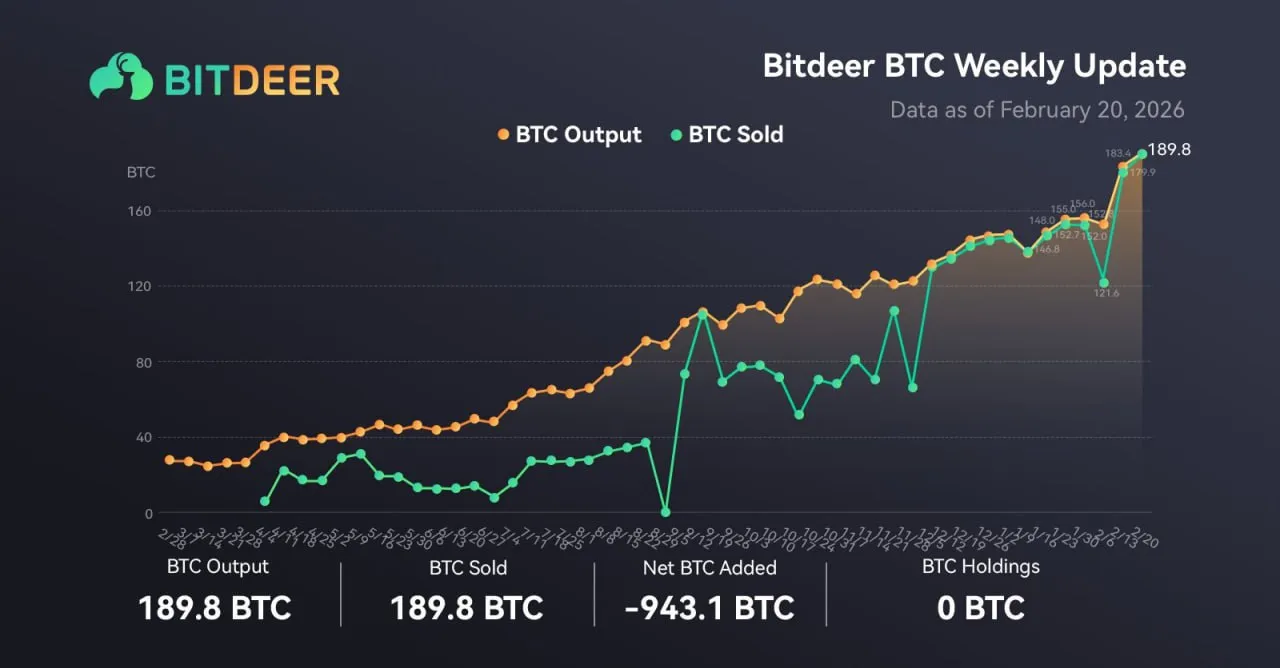
Bitdeer Sells 943 BTC: Miner Capitulation 2026
By On-Chain Analytics & Mining Economics Team | Last Updated: February 22, 2026
The operational realities of the cryptocurrency mining sector are becoming increasingly brutal. In a stark display of macroeconomic pressure, major publicly traded mining firm Bitdeer (NASDAQ: BTDR) has officially liquidated its entire Bitcoin treasury. According to recent filings, the company sold all 943 BTC in its reserves, effectively dropping its on-hand holdings to zero.
This is not a singular event; it is a symptom of a broader industry trend known as "Miner Capitulation." As the long-tail effects of the previous halving continue to squeeze profit margins in 2026, massive industrial miners are being forced to choose between holding their digital gold or paying their massive fiat electricity bills.
Risk Disclosure: On-chain metrics, including miner selling pressure, can cause severe short-term volatility in the Bitcoin spot price. Investors should be aware that public mining companies often dilute shareholder equity or liquidate crypto assets to maintain operational cash flow. The SEC warns investors to carefully review the quarterly earnings reports (Form 10-Q) of public crypto companies before investing.
Featured Snippet Answer: Miner capitulation occurs when cryptocurrency miners are forced to sell their accumulated Bitcoin reserves to cover operational expenses (OPEX) like electricity and hardware upgrades. This typically happens when the cost to mine a single Bitcoin exceeds its current market price, often triggered by a halving event that cuts mining rewards in half.
When a major player like Bitdeer sells 943 BTC (worth tens of millions of dollars), it sends a shockwave through the market. To understand why a company built to accumulate Bitcoin is suddenly dumping it, we must examine the ruthless mathematics of the mining industry in 2026:
- The Halving Squeeze: Following the halving, the block reward dropped significantly. Miners are doing the exact same amount of computational work for half the BTC revenue.
- Hashprice Plunge: Hashprice is the metric used to calculate how much a miner earns per terahash of computing power. With global hash rate remaining highly competitive and rewards halved, the hashprice has hit historic lows.
- Fiat Obligations: Utility companies and ASIC hardware manufacturers (like Bitmain) do not accept Bitcoin. They demand US Dollars. When operational cash flow dries up, the BTC treasury becomes the only lifeline.
From a professional trading perspective, watching miners bleed is actually a highly actionable macroeconomic signal.
The Capitulation Cycle: Historically, retail traders panic when they see headlines about miners dumping thousands of Bitcoins. They assume the "smart money" is exiting the network. However, experienced on-chain analysts view this differently.
- The Flush: When inefficient miners are forced to sell their reserves and unplug their machines, the global hash rate temporarily drops.
- The Adjustment: The Bitcoin network automatically adjusts its mining difficulty downward, making it slightly more profitable for the surviving, highly efficient miners.
- The Bottom Indicator: Massive spikes in miner outflows (like Bitdeer liquidating 100% of its treasury) have historically marked macro bottoms in the Bitcoin price cycle. Once the forced sellers have zero BTC left to dump, a major source of market sell-pressure is exhausted.
For a deeper dive into how market cycles are influenced by supply and demand shocks, Investopedia's breakdown of Market Cycles is essential reading.
Bitdeer's decision to drain its reserves to zero highlights a pivot in corporate strategy. In 2026, simply holding Bitcoin is a luxury that only the most well-capitalized firms can afford.
The survival blueprint for public mining companies now requires:
- Extreme Efficiency: Upgrading to the latest generation of sub-20 J/TH (joules per terahash) ASIC rigs to lower the break-even cost of mining.
- AI Diversification: Many mining facilities are retrofitting their data centers to provide High-Performance Computing (HPC) for artificial intelligence startups, generating alternative, non-crypto revenue streams.
- Geographic Relocation: Hunting for stranded, ultra-cheap renewable energy sources globally to lower the base cost of electricity.
Bitdeer selling its 943 BTC reserve is a harsh reminder that Bitcoin mining is an industrial commodity business with razor-thin margins, not just a money-printing machine. While this capitulation phase introduces short-term selling pressure into the spot market, it is a necessary, cyclical cleansing of inefficient capital. Traders and investors should closely monitor on-chain miner balances; when the dumping stops, the next major accumulation phase traditionally begins.
Q: Does Bitdeer selling all its Bitcoin mean the company is going bankrupt? A: Not necessarily. Liquidating a BTC treasury is a strategic financial move to generate instant cash flow for operations or hardware upgrades without taking on high-interest debt or diluting stock.
Q: What is "Hashprice" in crypto mining? A: Hashprice is a metric, usually denominated in dollars per terahash per day ($/TH/s/day), that represents the expected revenue a miner will earn from a specific amount of computing power.
Q: Where can I track miner capitulation data? A: On-chain analytics platforms like CryptoQuant and Glassnode track "Miner Net Position Change" and "Miner Outflows," which show in real-time when mining pools are moving BTC to exchanges to sell.
- Primary Data Source: Bitdeer Official Announcement (X)
- Risk & Regulation: SEC.gov - Margin Rules and Corporate Disclosures
- Financial Concepts: Investopedia - Market Cycles