

📣 Create Blog for Traders!
Stop Watching news - Start Making it.
START



Why Gold Has Not Surged Despite Rising Geopolitical Tensions
In traditional market thinking, geopolitical conflicts - such as the Russia-Ukraine war or the ongoing Iran-Israel tensions - are typically viewed as catalysts for Gold rallies. Heightened uncertainty and global instability often push investors toward safe-haven assets, with Gold historically benefiting the most.
However, market behaviour in March 2026 has created a notable paradox: despite escalating geopolitical tensions, Gold prices have not surged dramatically.
This has left many investors asking the same question: why hasn’t Gold moved higher? Has Gold lost its safe-haven status?
The short answer is no. Gold has not lost its role as a safe-haven asset. Instead, its relatively muted performance reflects the interaction of several powerful macroeconomic forces - most notably a stronger US dollar, elevated US Treasury yields, and shifting market positioning.
To understand the current environment, several key factors must be considered.
When geopolitical tensions rise, investors do not simply seek safety - they seek liquidity combined with yield. This distinction is critical in explaining why Gold has not rallied as strongly as historical patterns might suggest.
During periods of global instability, investors often prioritise liquidity. In the current environment, the US dollar has become the primary beneficiary of this flight to quality.
The Dollar’s Safe-Haven Advantage
As Middle Eastern tensions push energy prices higher, fears of renewed inflation have intensified. This has directed capital flows into the US dollar.
Because Gold is priced in USD, a stronger dollar naturally creates resistance for Gold prices. As the currency appreciates, Gold becomes more expensive for international buyers, limiting upside momentum.
The Yield Advantage
Unlike Gold, US Treasury Bonds offer a return.
With the US 10-year Treasury yield holding near 4.1%, the opportunity cost of holding Gold - an asset that produces no yield - remains historically elevated. Many institutional investors are currently favouring the “risk-free” return of US government Bonds over non-yielding assets such as Gold.
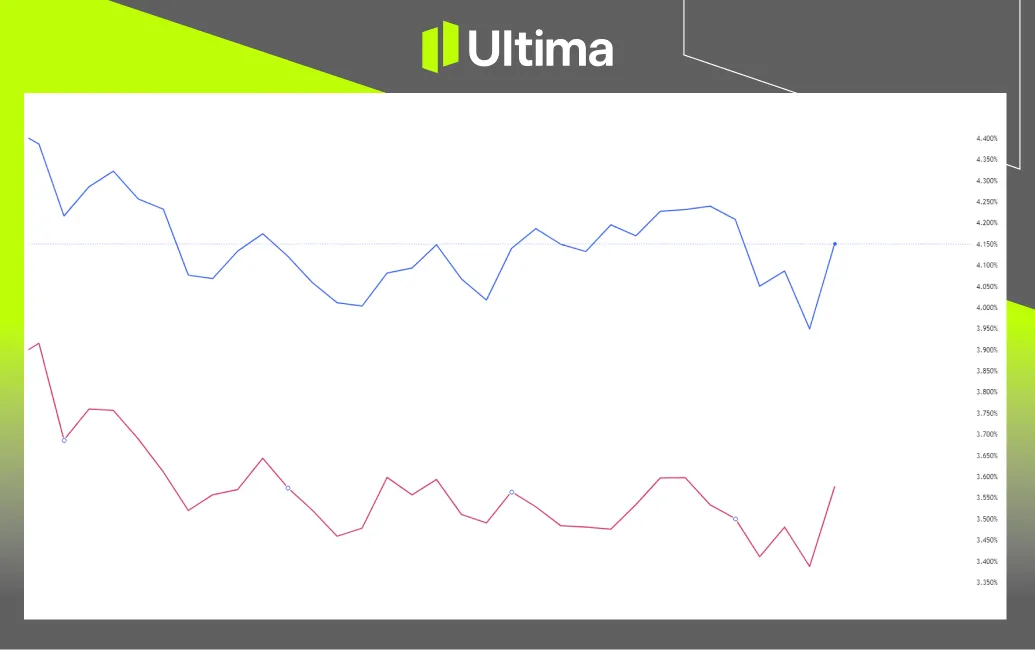
Another major factor supporting the dollar is the market’s reassessment of Federal Reserve policy.
Rising oil prices - Brent crude has climbed more than 30% YTD - have revived concerns about inflation. As a result, markets increasingly believe the Federal Reserve will maintain higher interest rates for longer.
Earlier expectations of aggressive rate cuts have been scaled back significantly.
This shift matters for Gold. Historically, Gold performs best when interest rates are falling. Conversely, when the Federal Reserve maintains a hawkish stance and yields remain elevated, Gold typically struggles to generate strong upside momentum.
Another key factor is simple market mechanics.
While some investors question why Gold is not rallying further, it is important to recognise that Gold has not collapsed either. Instead, the metal is consolidating after an extraordinary rally.
Overbought Conditions
Gold reached an all-time high of $5,595 in late January 2026, following an approximately 100% rally over the past year. At these levels, many institutional traders are taking profits rather than aggressively chasing higher prices.
Capital Rotation
Investors are also diversifying their crisis exposure. Some capital has rotated into energy markets, betting on supply disruptions, while others prefer holding USD cash for liquidity.
As a result, Gold has entered a sideways consolidation phase, reflecting a market that is reassessing risk rather than aggressively bidding prices higher.
While Western markets focus on short-term positioning, the physical Gold market is quietly providing strong structural support.
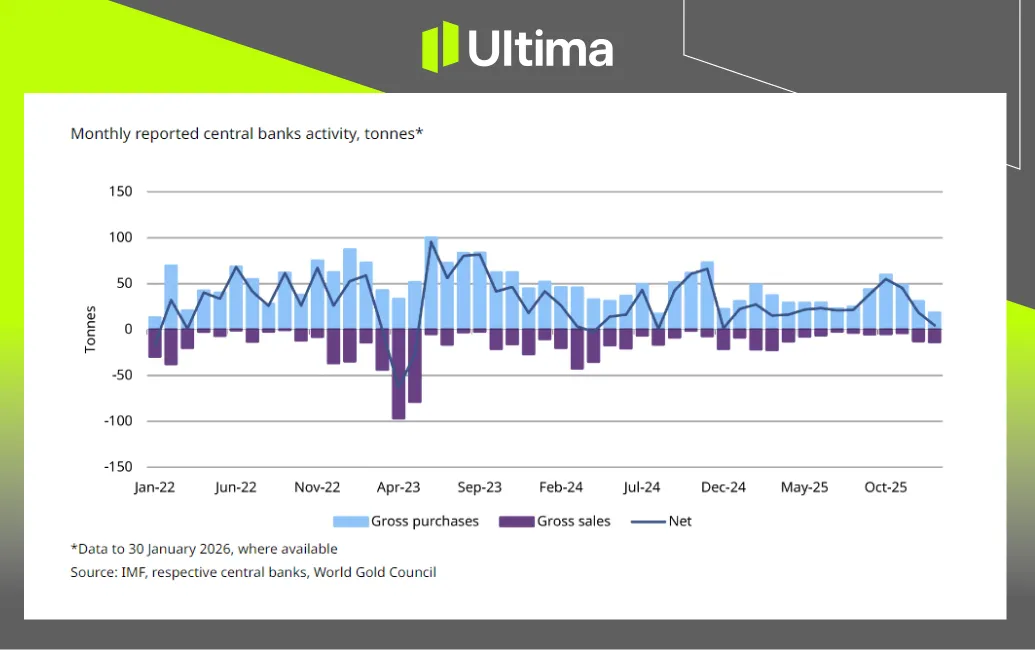
Although central bank purchases slowed at the beginning of the year - January recorded net purchases of just 5 tonnes, compared with a 12-month average of 27 tonnes - the underlying accumulation trend remains intact.
China’s Continued Buying
The People’s Bank of China has now reported 15 consecutive months of Gold purchases, reinforcing a longer-term diversification strategy away from US dollar reserves.
Strategic Flows from Russia
In addition to official purchases, market reports suggest China may have absorbed roughly 150 tonnes of Russian Gold through off-market transactions. These flows indicate continued strategic accumulation within Eastern markets.
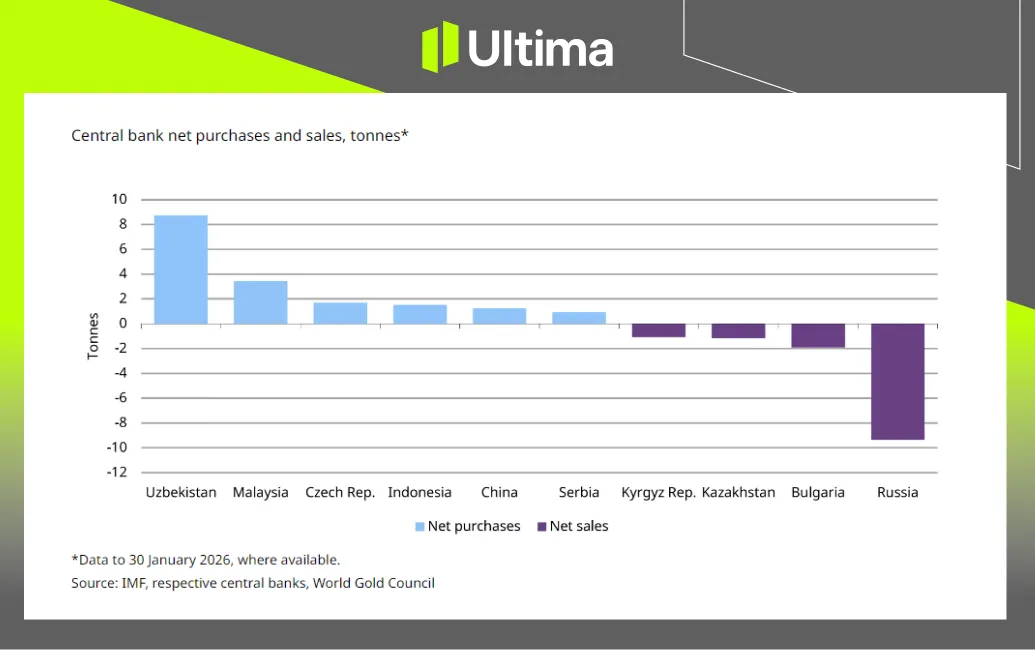
This persistent demand helps explain why Gold has not fallen sharply despite the strong dollar. When prices approach the $5,000 psychological level, central banks and private buyers appear willing to accumulate, effectively creating a structural price floor.
Gold remains a core safe-haven asset. Its current consolidation does not indicate weakness but rather reflects competing macroeconomic forces.
Geopolitical tensions are providing underlying support, preventing a major decline. At the same time, the strong US dollar and elevated interest rates are limiting the metal’s upside potential.
As long as inflation remains elevated and the Federal Reserve maintains a hawkish stance, Gold is likely to trade within a volatile range.
A decisive breakout may only occur once either:
- the Federal Reserve signals a clear policy pivot, or
- geopolitical tensions escalate beyond their current scope
Until then, Gold’s role remains intact, but its trajectory will continue to be shaped by the broader macro landscape.
Navigating and trading the forex markets requires clarity, discipline, and access to reliable insights. Ultima Markets is committed to providing data-driven analysis to support informed trading decisions.
Join Ultima Markets today and stay connected with us by following us on social media for the latest news, events, and product updates. Visit UM Academy and access unlimited educational trading resources to help you master the markets.
—–
Trading leveraged derivative products carries a high level of risk and may not be suitable for all investors. Leverage can magnify both gains and losses, potentially resulting in rapid and substantial capital loss. Before trading, carefully assess your investment objectives, level of experience, and risk tolerance. If you are uncertain, seek advice from a licensed financial adviser. Leveraged products are not intended for inexperienced investors who do not fully understand the risks or who are unable to bear the possibility of significant losses.
Comments, news, research, analysis, price, and all information contained in the article only serve as general information for readers and do not suggest any advice. Ultima Markets has taken reasonable measures to provide up-to-date information, but cannot guarantee accuracy, and may modify without notice. Ultima Markets will not be responsible for any loss incurred due to the application of the information provided.