

📣 Create Blog for Traders!
Stop Watching news - Start Making it.
START



Goldman Sachs Data: Hedge Funds Surge US Stock Longs
By Institutional Flow & Macro Strategy Desk | Last Updated: February 23, 2026
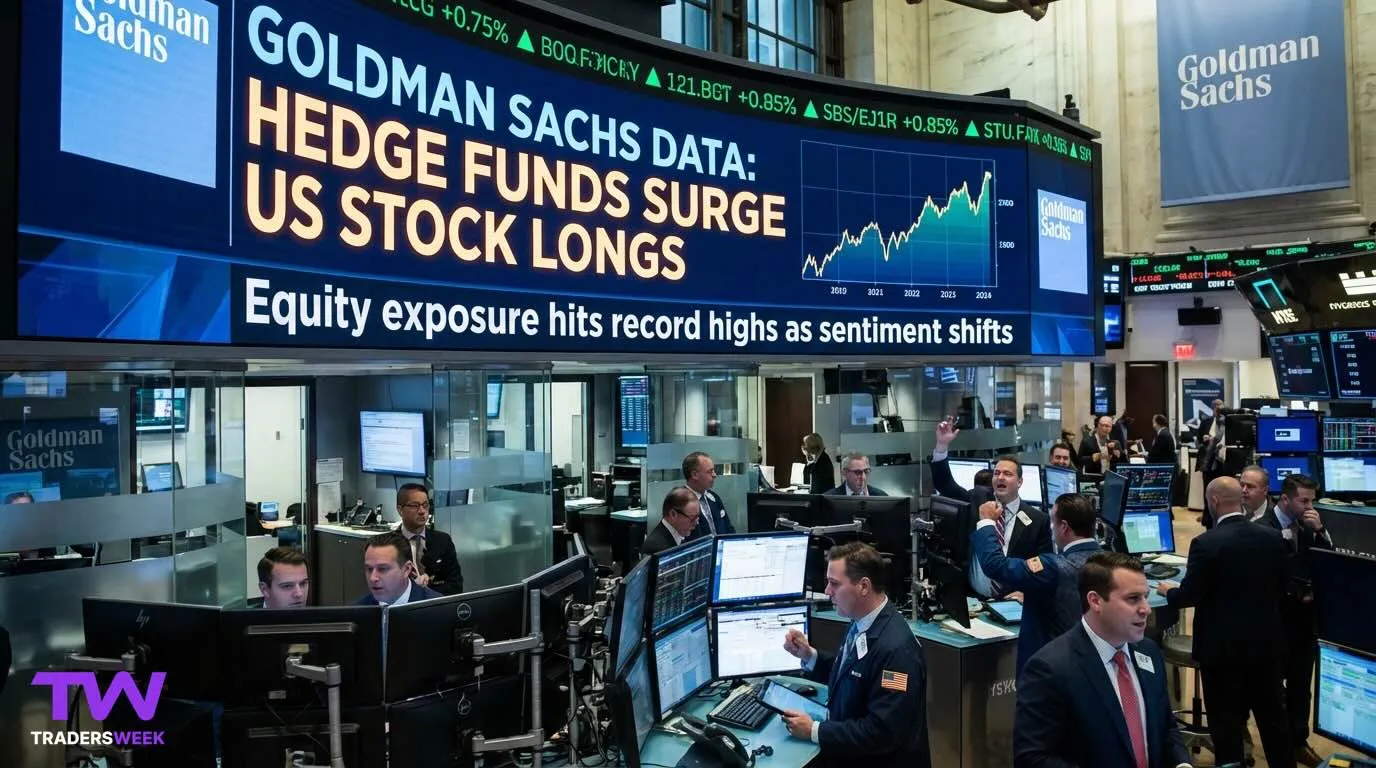
When the world's most sophisticated pools of capital move synchronously, the entire financial ecosystem feels the tremor. According to recent prime brokerage data released by Goldman Sachs, hedge funds and institutional asset managers are aggressively ramping up their long positions in US equities. This massive influx of capital indicates a robust "Risk-On" sentiment permeating Wall Street in early 2026.
However, interpreting this institutional flow is not as simple as blindly buying the S&P 500. While the "Smart Money" is building massive upside exposure, they are doing so with complex hedging strategies that retail traders cannot easily replicate. Understanding the mechanics behind this data is crucial to avoid becoming exit liquidity for these massive funds.
Risk Disclosure: Following institutional capital flows is a highly advanced trading strategy. Hedge funds often employ "Long/Short" market-neutral strategies. If you only copy their long positions without implementing their corresponding downside hedges, you are exposed to infinite downside risk. The SEC continuously warns retail investors about the dangers of highly leveraged institutional tracking.
Featured Snippet Answer:
When hedge funds "increase longs" in US stocks, it means institutional managers are actively buying equities or call options, anticipating future price appreciation. This data is tracked through closed prime brokerage reports (like those from Goldman Sachs) and public regulatory filings known as the Commitments of Traders (COT) report issued by the CFTC.
To truly grasp the magnitude of this shift, we must look at how analysts calculate institutional exposure. The data generally falls into two categories:
- Net Exposure vs. Gross Exposure: A fund might buy $100 million of Apple (a long position) but simultaneously short $50 million of a tech ETF. Their Gross Exposure is $150 million, but their Net Long Exposure is calculated mathematically as:$$Net\ Long = Total\ Longs - Total\ Shorts$$The Goldman data specifically highlights that the Net Long positioning is surging, meaning the absolute bullish bets are far outweighing the bearish hedges.
- The COT Confirmation: While Goldman's data gives a real-time pulse from their specific prime brokerage desk, the weekly Commitments of Traders (COT) report from the CFTC confirms this across the broader futures market, showing speculators aggressively buying E-mini S&P 500 contracts.
From a trading desk perspective, extremely high hedge fund long positioning is actually a double-edged sword. It creates what professionals call a "Crowded Trade."
The Danger of Euphoria:
- The Setup: Imagine a boat where everyone runs to one side to look at something exciting. The boat becomes unstable. In financial markets, if every major hedge fund is already "Long" on US stocks, the question becomes: Who is left to buy and push the price higher?
- The Liquidity Cascade: If a negative macroeconomic catalyst suddenly hits the wire (e.g., a hotter-than-expected CPI inflation print), these funds will rush to the exit simultaneously. Because they are all positioned on the same side, there are no buyers to absorb their massive sell orders.
- The Result: This triggers a rapid liquidity cascade, causing sudden and violent flash crashes in the stock market. Retail traders who bought at the top, thinking the market was safe because "Goldman said funds are buying," get wiped out via margin calls.
If you cannot beat them, how do you trade alongside them safely? Institutional analysts recommend the following protocols when navigating highly concentrated markets in 2026:
- Do Not Chase the Top: If the data shows hedge funds have already accumulated massive longs, you are late to the party. Look for relative strength in sectors that funds are just beginning to rotate into, rather than the mega-cap stocks they have already pumped.
- Watch the VIX: Institutional buying often suppresses volatility. Monitor the CBOE Volatility Index (VIX). If the VIX starts to rise while the stock market is still going up, it is a glaring warning sign that hedge funds are secretly buying put options to protect their massive long portfolios.
- Understand the Macro Backdrop: Funds are betting on specific economic outcomes. For a foundational understanding of how macroeconomic indicators drive these massive capital allocations, Investopedia's guide to Macroeconomics is essential.
The aggressive accumulation of long positions by hedge funds, as highlighted by Goldman Sachs, is a powerful validation of the current bull market's strength. However, sophisticated traders know that extreme positioning introduces fragility into the system. Use this data as a compass, not a crystal ball, and ensure your personal risk management is tight enough to survive the inevitable moment when the "Smart Money" decides to take its profits.
Q: What is a Prime Brokerage?
A: A prime brokerage is a suite of specialized services offered by major investment banks (like Goldman Sachs or Morgan Stanley) to hedge funds. These services include lending capital, executing massive trades, and providing centralized clearing, which gives the bank immense insight into what the funds are buying and selling.
Q: How do I read the COT report myself?
A: The CFTC publishes the Commitments of Traders report every Friday. Traders focus on the "Non-Commercial" category, which represents large speculators like hedge funds, to see if they are net long or net short on major indices.
Q: Should I buy stocks if hedge funds are buying?
A: Not necessarily. Hedge funds have holding periods and risk tolerance levels completely different from retail investors. By the time their buying activity makes the news, the optimal entry point has usually passed.
- Regulatory Data: CFTC.gov - Commitments of Traders (COT) Reports
- Risk Management: SEC.gov - Ten Things to Consider Before You Invest
- Financial Concepts: Investopedia - Macroeconomics