

📣 Create Blog for Traders!
Stop Watching news - Start Making it.
START


US Debt at $64T? Why Prop Firm Traders Should Ignore It
Bank of America's debt forecast is terrifying, but for a funded trader, it's dangerous noise. Here's how I'm trading this market.
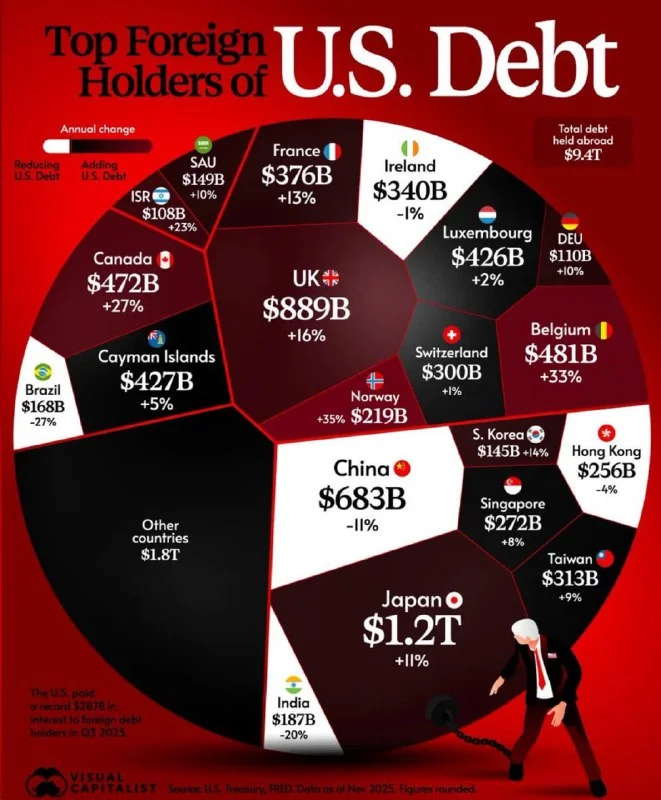
I saw the Bank of America headline this morning: US public debt is expected to hit $64 trillion in a decade. My phone immediately blew up with group chats screaming 'The dollar is finished!' and 'Time to pile into Bitcoin!' My first thought? I checked my daily drawdown limit on my FundedNext account. Seriously. While the macro tourists are panicking about a crisis ten years away, I'm worried about surviving the next ten hours. This kind of news is a classic trap for aspiring prop firm traders. It makes you feel like you need to take a massive swing for the fences, when the entire game is actually about hitting consistent singles.
I've failed over 20 prop firm challenges, and I can tell you that at least a handful of those failures came from getting married to a big, sexy macro idea. You see a forecast like this $64 trillion debt bomb and think, 'This is it, the big short on the dollar.' So you load up, ignore your rules, and get promptly run over by short-term price action that couldn't care less about 2036. The truth is, a prop firm's timeline is microscopic. Your career is measured in days (daily drawdown) and months (profit splits), not decades.
This news doesn't tell me to short the dollar. It tells me to expect volatility. It means bigger, faster swings in pairs like EUR/USD and GBP/USD. It means the market is more likely to have those violent whipsaws that are specifically designed to liquidate leveraged traders. Guys like Viktor Reyes are brilliant at piecing together the long-term commodity cycle, and I respect his calls on gold. But when I'm trading XAU/USD on a $100k account with a $5k daily loss limit, I'm managing my risk on the 15-minute chart, not positioning for the downfall of fiat currency.
So how do you actually trade this? You filter the noise through a rigid set of rules. For me, it comes down to treating days like today not as an opportunity, but as a hazard. My goal isn't to be a hero; it's to protect my funded account and live to trade tomorrow. A successful FTMO challenge strategy isn't built on one massive win, but on avoiding the one massive loss that blows you up. This debt news just raises the odds of that one massive loss hitting you if you're not prepared.
- Position Size Halved: On days with market-moving headlines, I cut my standard risk from 0.5% of my account to 0.25%. Always.
- No 'Hero' Entries: I wait for a clear break and retest of a key level on the 1H or 4H chart. I am not trying to guess the top or bottom of the initial news spike.
- Focus on One Pair: I'll stick to EUR/USD. Trying to manage multiple positions in this environment is a recipe for disaster.
- Hard Stop Is Sacred: My hard stop is placed the moment I enter a trade and is never, ever moved further away. If I get stopped out, I'm done for the morning.
Something most gurus don't discuss in a typical FTMO vs FundedNext review is execution quality during high volatility. It's a key metric in my personal spreadsheet where I do a detailed prop firm payout comparison. Who will actually fill you near your price when NFP drops, and who will give you 10 pips of slippage? In my experience, both are Tier-1. However, during the last CPI print, I noticed my fill on FundedNext was instant, while an FTMO account I was trading saw about 1.2 pips of slippage on a EUR/USD entry. It's not a dealbreaker, but it's something I track. This kind of analysis is worlds more important than worrying about where US debt will be in ten years. While Emma Blackwood is likely analyzing how this debt load impacts long-term equity valuations, I'm focused on which platform saves me that extra pip when it matters most.
Let's be honest. The biggest danger from the BofA report isn't the debt itself; it's what it does to your trading brain. It injects a massive dose of FOMO and a feeling of urgency. It makes you think your simple, boring strategy isn't enough. I blew my third and fourth challenges trying to be a macro wizard. I'd read a headline, convince myself I knew what was coming, and then proceed to lose my account in 48 hours. I've since received over $180K in payouts by doing the exact opposite: trading small, respecting my daily loss limit, and admitting I have no idea what the market will do next.
The market can stay irrational longer than a prop firm gives you to stay solvent. Trade your rules, not the headlines.
The $64 trillion number is just that—a number. It doesn't change my support and resistance levels for this afternoon's session on the E-mini S&P futures. It doesn't alter my 0.5% risk parameter. The professionals are focused on their execution and risk, while the amateurs are debating fiscal policy in Discord. So, instead of asking how you'll trade the coming debt crisis, maybe the better question is: are your personal trading rules strong enough to survive the volatility it creates between now and Friday's close?