

📣 Create Blog for Traders!
Stop Watching news - Start Making it.
START


Rates & Gas Surge: Is a US Recession Inevitable in 2026?
US mortgage rates top 7% and gas hits $4, while political approval sags. I'm breaking down what this means for your trades and how I'm protecting my capital.
Everyone's panicking about 7% mortgages and $4 gas hitting the headlines this week. The common narrative? The sky is falling. But as a prop firm trader who’s been through the wringer—failing my first six challenges before finally passing—I've learned that reacting to headlines with fear is a surefire way to blow an account. This macroeconomic environment, with US mortgage rates topping 7% and gas prices averaging $4, is *exactly* why strict risk management is key. It’s what separates consistent traders from those who flame out fast, especially if you're trying to pass a prop firm challenge or manage a funded account.
TL;DR: The current macro data signals significant economic headwinds, making a defensive, consistent trading strategy more critical than ever. Don't chase big wins; focus on not losing.
Today, March 26, 2026, we’re seeing some serious economic pressure points. I'm not here to just repeat the news; I'm here to tell you how I'm positioning myself and what I'm looking for. This isn't about making money fast, it's about staying in the game, which is the biggest lesson I learned from my 20+ failed challenges.
The average 30-year fixed mortgage rate soaring past 7% isn't just a number for potential homeowners; it’s a flashing red light for the broader economy. This morning, I saw reports indicating average monthly payments on a median-priced home are up nearly 30% year-over-year. What does this mean? Less disposable income, plain and simple. Consumers, already feeling the pinch, will pull back on discretionary spending. This directly impacts sectors like retail and leisure, and I expect to see that trickle down into corporate earnings reports by Q2. I'm with Jake Morrison here, who recently highlighted a 'Housing Market Gap Hits Record' – this rate hike will only widen that gap and put more pressure on asset prices.
When gas prices hit $4 a gallon nationwide, it's a direct tax on every single American with a car. My spreadsheet shows crude oil (WTI) hovering around $85/barrel this week, which is a key driver. While Viktor Reyes has been incredibly accurate with his commodity calls, especially on gold, the real impact here for me isn't just the price of oil, it's the ripple effect. This isn't just about inflation; it's about consumer confidence taking another hit. People adjust their spending habits immediately, which slows down the velocity of money. I'm watching retail sales data closely heading into Friday's close for confirmation of this slowdown. Higher fuel costs squeeze profit margins for businesses and put more pressure on household budgets, making any recovery feel even more distant.
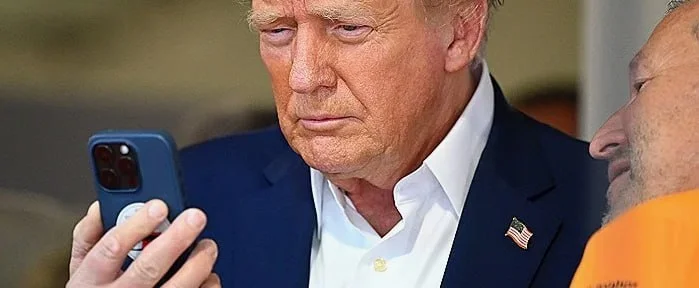
Trump's approval rating hitting a record low of 36% might seem like political news, but it absolutely plays into market sentiment. Political instability creates uncertainty, and markets hate uncertainty. I'm not a political analyst, but as a trader, I pay attention to anything that can cause unexpected volatility. Less public confidence often translates to less business confidence, and that can deter investment. I've seen the VIX index tick up slightly this week, indicating a rise in implied volatility, and I think political uncertainty is a quiet contributor. For my E-mini S&P futures trading, this means I'm tightening my stops and reducing my position sizes. It's all about capital preservation right now.
This kind of macro environment screams 'caution' to me. My morning routine hasn't changed: check daily drawdown limits, mark key levels, and set my max loss for the day. But now, my position sizing is even smaller, and my targets are more conservative. The biggest lesson for anyone trying to pass a challenge, or managing a funded account for that matter, is that the challenge is about NOT losing, not about making money fast. That's why strict risk management is the core of my edge.
- EUR/USD: I'm watching for a break below 1.0820 on the 4-hour chart. The 21 EMA on the 4H is acting as resistance.
- USD/JPY: Looking for potential long setups if 151.50 holds as support, but caution is warranted with geopolitical news.
- E-mini S&P Futures: Scalping around the 5200 level, with strict 5-point stop losses. Volatility is high, so I'm not holding positions overnight.
For those asking about the Emma Blackwood often talks about for beginners, the firms that prioritize long-term consistency over aggressive targets are always the ones I recommend. FundedNext and TopStep have worked well for me because their rules, while strict, reward controlled trading. I've been paid out from both within 3 days this month. They understand that a funded trader daily routine isn't about hitting home runs every day, it's about singles and doubles.
In these volatile times, my rule #1 on a funded account is simple: if I'm not 100% sure, I don't trade. Cash is a position, and sometimes, the best trade is no trade at all.
What invalidates my current cautious thesis? A sudden, significant drop in crude oil prices, or a surprisingly strong consumer confidence report that defies expectations. But until I see that data, I'm staying defensive. We're in a period where managing risk is your primary job, especially if you're aiming to be the best prop firm for futures trading by actually *passing* and getting paid out. What are you seeing in the markets that challenges this cautious outlook?