

📣 Create Blog for Traders!
Stop Watching news - Start Making it.
START


EUR/USD Analysis: Why Everyone is Getting the ECB Wrong
The market is pricing in a dovish ECB and a hawkish Fed. From my time at the central bank, I can tell you that's a dangerous oversimplification.
Let's be honest. The consensus trade right now is to be short the Euro. Every analyst on TV is singing from the same hymn sheet: the Fed is hawkish, the ECB is dovish, so sell EUR/USD. It's simple, it's clean, and it's probably wrong. When a trade becomes this crowded, I get interested in the other side. My time at the ECB taught me one thing: central bank decisions are messy, political, and never as straightforward as the market wants to believe. If you're scanning for **currency pairs to trade today**, overlooking the nuance in the Euro is a massive mistake. Let me break down what I'm seeing.
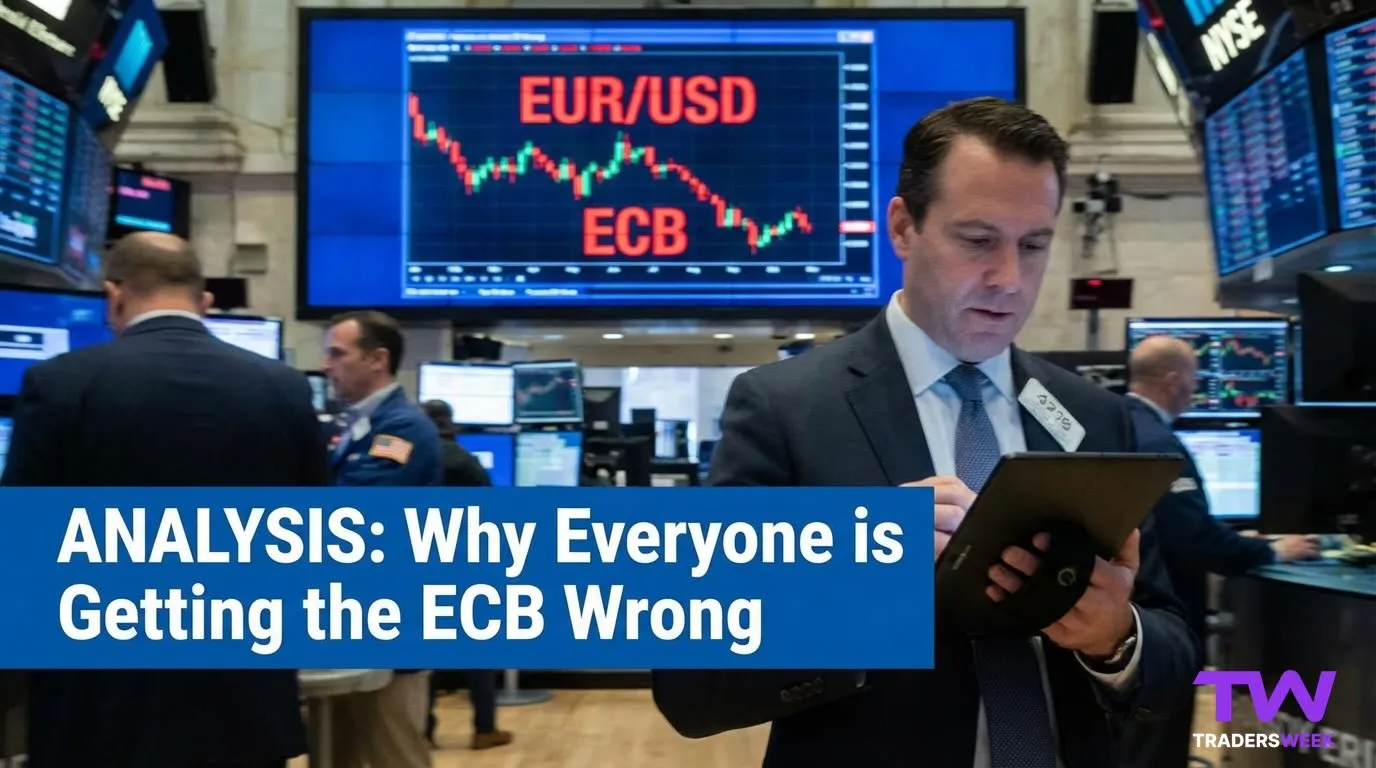
The market paints the European Central Bank with a single, dovish brush. That's a caricature. The ECB isn't a monolith; it's a committee managing twenty different economies. When I was a junior researcher in Frankfurt, the real debates weren't in the press conferences, they were in the pre-meeting briefs about German wage growth and French services inflation. Those are the things that keep Governing Council members up at night.
Right now, everyone is listening to Christine Lagarde's carefully crafted public statements. But I'm reading the original Bundesbank reports in German, and they are practically screaming about persistent inflationary pressures. The hawks on the council are getting restless. The market is pricing the ECB as if it has already surrendered, but the fight against sticky services inflation is far from over. This is the core of understanding **central bank monetary policy**—it's not about the last battle, it's about the next one.
And what about the other side of the pair? The mighty dollar. Yes, the Fed has been aggressive. But at what point is all the good news priced in? We've had months of hawkish talk. The market has digested it, priced it, and moved on. The risk now is asymmetric. A surprisingly strong US data print might give the dollar a temporary pop, but a surprisingly soft one could cause a massive unwinding of long-dollar positions. The bar for a hawkish surprise is incredibly high, while the bar for a dovish disappointment is quite low. As my colleague Sarah Chen notes in her earnings analysis, US corporations are already feeling the pinch of higher rates; the Fed can't ignore that forever.
I update my interest rate differential spreadsheet every single morning. It's the first thing I look at. While the absolute yield is higher in the US, forex markets move on the *rate of change* in expectations. The market has fully priced a widening US-EU spread. My entire thesis is that this spread is about to start compressing, not because the Fed will suddenly turn dovish, but because the ECB will be forced to be more hawkish than anyone expects. The **inflation impact on forex** is most powerful when it's unexpected.
So, how am I trading this view? I'm not blindly buying the Euro. I'm a patient trader. I've been watching the 1.0720 area for days. It's a key technical zone, and I'm looking for signs of buyers stepping in to defend it. I believe the macro-outlook supports this, especially given some of the commodity weakness that Viktor Reyes has been highlighting, which could act as a cap on dollar strength.
- Key Support Zone: 1.0720 - 1.0750
- My Invalidation Level: A daily close below 1.0680.
- Initial Profit Target: The psychologically important 1.0900 level.
- Entry Signal: Waiting for a bullish engulfing candle or a pin bar on the 4H or Daily chart in my support zone.
Of course, I could be completely wrong. A contrarian view is uncomfortable for a reason. If the next US CPI or NFP report comes in scorching hot, all bets are off. That would give the Fed a green light to get even more aggressive, and my support level at 1.0720 would likely crumble. Similarly, if a prominent ECB hawk like Joachim Nagel were to give a surprisingly dovish interview, it would completely invalidate my thesis. Risk management isn't optional in this game; it's everything.
Everyone is focused on the Fed's next move. The real trade is correctly predicting the ECB's *reaction* to the Fed's next move. They aren't passive observers.
Ultimately, I'm fading the crowded short-Euro trade. It feels a bit like leaning into a punch, but that's often where the best opportunities are found. The biggest forex moves happen when the consensus is forced to unwind in a panic. The only question is, what's the catalyst that lights the fuse? Is it a surprisingly soft US data print, or an unexpectedly hawkish leak from an ECB insider?