

📣 Create Blog for Traders!
Stop Watching news - Start Making it.
START


Ags Are Coiling: Why I'm Stalking Corn and Soybeans
Everyone is obsessed with crude oil, but the real asymmetric trade is setting up in agricultural commodities. Here's my playbook.
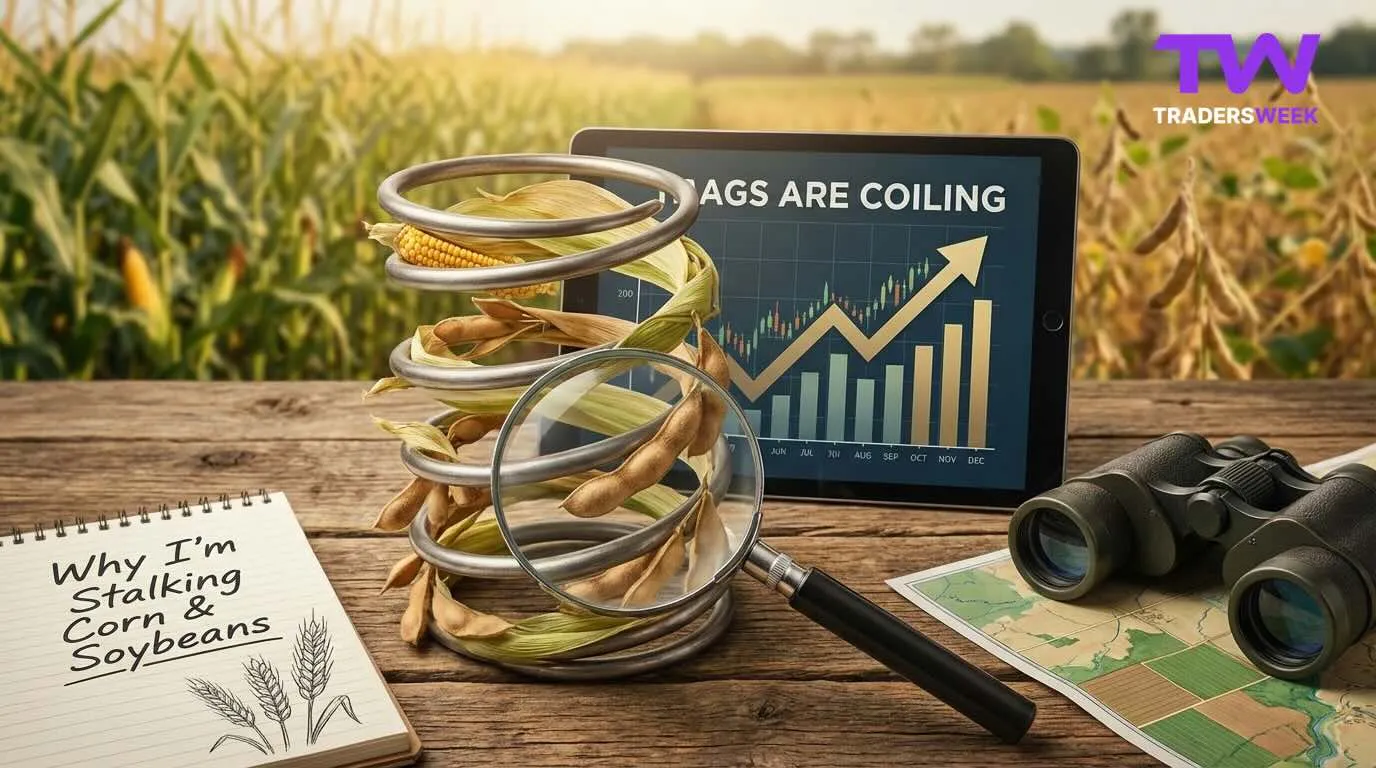
So here's what nobody's talking about. Every screen I see is lit up with WTI and BRENT charts. Every conversation is about the latest crude oil price analysis and what the Saudis will do next. It's noise. The real trade, the one the smart money is quietly positioning for, isn't in the oil barrel. It's in the grain silo.
I get it. Oil is sexy. But the same fundamentals that drive energy are creating an even cleaner setup in agriculture. Weather, geopolitical supply shocks, and inelastic demand. I've been trading commodities for 12 years, ever since my days screaming in the pits in Chicago, and I know a coiled spring when I see one. While Jake Morrison is looking at the big macro picture, I'm looking at the weather maps and the latest Commitment of Traders report. And they're telling me to look at corn.
My morning routine is simple: coffee, overnight futures, Reuters wire, and weather maps. The weather is everything in ags. We're seeing a shift in Pacific Ocean temperatures that could have a massive impact on the U.S. growing season. The market hasn't priced this in yet. It's still fixated on last year's supply. But the commercials—the big grain producers and users like ADM and Cargill—are starting to build positions. I saw it in Friday's COT report. They're my canaries in the coal mine.
- My Buy Zone: I'm looking to build a long position in Corn (ZC) futures between $4.25 and $4.35/bushel.
- Initial Profit Target: Taking first profits around the $4.80 level, which is a key resistance area from last fall.
- Hard Stop: If we get a weekly close below $4.10, the thesis is wrong and I'm out. No questions asked.
Soybeans are a different animal, driven more by global demand, specifically from China. But it's also an energy story that most traders miss. While everyone debates the `OPEC production cuts impact`, the quiet bull case is renewable diesel. Soybean oil is a primary feedstock. It's a backdoor energy play without the OPEC headline risk. Emma Blackwood does great work covering traditional energy stocks, but this is the derivative trade that gets ignored. It's a supply-demand story that's much cleaner than trying to guess Putin's next move.
This is where having contacts helps. My sources on the ground in South America are telling me the crop estimates coming out of Brazil might be… optimistic. Let's leave it at that. The official numbers are one thing, but the real-time anecdotes about yields are another. I trust the guys driving the tractors more than I trust a government report. This is my edge.
I hear the term `commodity super cycle` being thrown around again. That's a narrative. And narratives get you killed. I learned that lesson the hard way blowing up my first account on a natural gas trade. It was the best $30K tuition I ever paid. I don't trade grand theories. I trade price, volume, and supply/demand facts. The trade is what's on the screen, not the story in your head.
The risk here is simple: perfect weather and a surprise drop in Chinese demand. A sudden, sharp rally in the U.S. dollar would also be a headwind. That’s why my stop at $4.10 on corn isn't just a suggestion; it's a rule. If I'm wrong, I want to be wrong small and live to trade another day.
Forget the digital tulips and the oil headlines. Physical assets you can drop on your foot are where the real edge is. Right now, that edge is growing in a field in Iowa, not sitting in a tanker in the Strait of Hormuz.
The entire market is leaning one way, positioned for an energy shock from crude oil. But what happens if the real inflation shock this year comes from the global food supply?