

📣 Create Blog for Traders!
Stop Watching news - Start Making it.
START
A Prop Firm Lesson: Trading Geopolitical Shocks
The Pentagon's Greenland move is a reminder of my biggest funded account mistake. Here's my funded trader strategy for these events now.
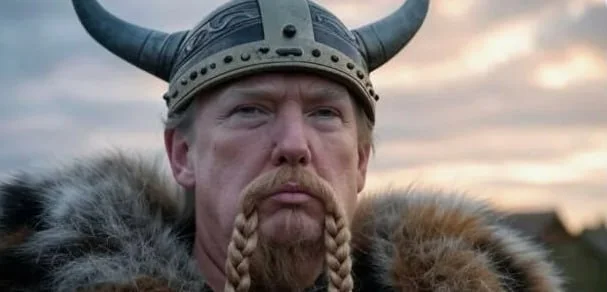
This morning's headline about the Pentagon working to 'establish control over Greenland' sent a jolt through me, and not just because of the obvious geopolitical implications. It took me right back to early 2022, staring at a blown prop firm challenge, all because of a similar 'out-of-the-blue' news spike. I failed my fourth challenge attempt that day. It was a painful, expensive lesson in how markets really react to world-changing news. It’s not about direction; it’s about survival.
The setup was perfect. It was late February 2022, and tensions in Eastern Europe were boiling over. The consensus was a flight to safety. Gold (XAU/USD) was the obvious play. I had my levels marked, my bias was long, and I was waiting for the catalyst. When the news finally broke about fresh sanctions, I thought, 'This is it.' I jumped in long at $1,910 on my $100k FTMO challenge account, risking a full 1%. I was so confident. Too confident.
And what happened? The market makers knew guys like me were piling in. The price immediately, violently, spiked down. It was a pure stop hunt. I was stopped out at $1,905 for a $1,000 loss in less than ten seconds. My daily drawdown limit was hit. And then, almost to mock me, Gold reversed and ripped straight through $1,950 over the next few hours without me. I was right on the direction but dead wrong on the timing and entry. That single trade taught me that in the prop firm game, surviving the volatility is more important than predicting the move.
Here’s what they don’t tell you in the YouTube ads. The secret of how to pass a prop firm challenge isn't about hitting 10%. It's about not hitting your -5% daily or -10% max drawdown. That one trade put me in a 1% hole instantly, and the psychological pressure to 'make it back' led to more mistakes. My entire funded trader strategy had to be rebuilt around this reality.
Now, my approach is completely different. It's less about being a hero and more about being a survivor. I've tracked this across multiple accounts and firms. In my personal FTMO vs FundedNext review spreadsheet, I have a column for 'news slippage' because that's how critical it is to manage. FundedNext has been a bit more stable during spikes for my EUR/USD trades, for what it's worth. My rules are now non-negotiable:
- Stay Flat: I do not hold a position into a known, high-impact news event. Period.
- The 15-Minute Rule: I don't touch anything for at least 15 minutes after the news drops. Let the algorithms and panic traders fight it out.
- Confirmation is Key: I wait for a 1-hour candle to close decisively above or below the range created by the news spike. That's my real signal.
- Half-Size Risk: My first trade after the news is always at 0.5% risk, not my usual 1%. I'm testing the waters, not diving in.
So, with this Greenland news, I'm doing exactly that: watching. What are the implications for rare earth minerals? For shipping lanes? For US-China relations? This is a long-term story, not a 5-minute scalp. For the deep macro chess moves, I’ll be reading whatever Emma Blackwood writes. She has a knack for cutting through the noise on these complex geopolitical issues.
And when it comes to the direct commodity impact, I'll be checking in on Viktor Reyes's analysis. He tracks everything from gold to copper, and a geopolitical shift this big will definitely show up in his work. His insights on how these events affect supply chains are invaluable. I'm not placing a trade until I see the market digest this news and give me a clean setup based on my new rules.
The market doesn't pay you for being right first. It pays you for being right and staying in the trade. Volatility is designed to shake you out before the real move happens.
I paid for this lesson with a failed $100k challenge. It hurt. But it was cheaper than learning it on a live funded account. It forced me to build a system that respects volatility instead of gambling on it. How much has 'being early' cost you in your trading journey?