

📣 Create Blog for Traders!
Stop Watching news - Start Making it.
START


RWA Tokenization: Ondo vs. Centrifuge—My Pick for 2026
Everyone's chasing the RWA narrative, but they're focusing on the wrong metrics. Here's a deep dive into the two leading protocols and which one I'm backing.
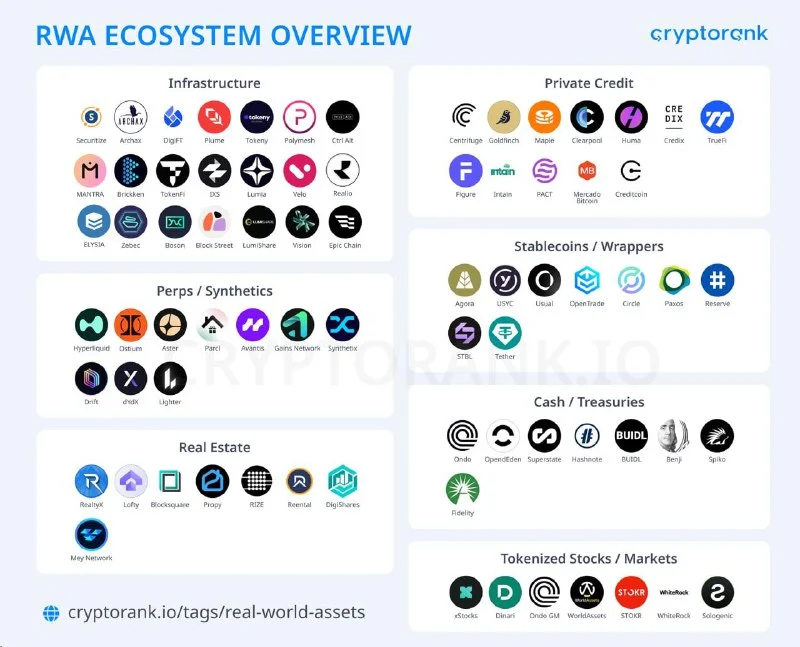
So here’s what nobody’s talking about with Real-World Assets (RWA). Everyone from BlackRock execs to Crypto Twitter is hyping the trillion-dollar opportunity, and they're not wrong. But they're treating it like a monolith, lumping every project together. This is the same mistake people made in DeFi Summer 2020 just before I was farming YAMs at 3 AM. The RWA space is splitting into two distinct camps: the regulated, TradFi-friendly giants and the decentralized, crypto-native pioneers. Today, I'm putting the two leaders of these camps head-to-head: Ondo Finance ($ONDO) and Centrifuge ($CFG). I hold both in my portfolio, but my allocation is shifting as we head deeper into 2026.
Ondo Finance is the darling of institutional capital, and it's easy to see why. Their primary products, like $USDY (a tokenized note secured by short-term US Treasuries), are structured for compliance and familiarity. They offer a stable, predictable yield, currently around 4.5%, which is a dream for risk-averse funds looking for blockchain exposure. Their TVL reflects this, pushing past $2.5 billion this week. The on-chain data reveals a clear pattern: large, infrequent transactions from institutional players. While my colleague Marcus Cole is likely focused on the $ONDO token's price chart, I'm more interested in their custodian relationships and the legal wrappers around their assets. It’s clean, it’s simple, and it’s built for big money.
The risk here isn't smart contract failure—their code is relatively simple and heavily audited. The risk is centralization and reliance on the traditional financial system. Ondo is essentially a tech-forward asset manager using blockchain as a settlement layer. This is powerful for adoption but sacrifices the permissionless, censorship-resistant ethos that got many of us into this space in the first place.
Then you have Centrifuge. I've been tracking these guys since they were just a paper on Polkadot. Centrifuge is building a truly decentralized protocol for anyone to tokenize and finance real-world assets—from invoices to real estate to music royalties. Their model is more complex, involving issuers, underwriters, and investors interacting in permissionless pools. Their TVL is smaller, sitting around $800 million, but the diversity of assets is staggering. The yields are higher but more variable, ranging from 6% to 12% depending on the specific asset pool's risk.
This is where a proper *DeFi risk assessment* becomes crucial. With Centrifuge, the smart contract risk is inherently higher due to the protocol's complexity. You also have asset-specific credit risk. My personal *smart contract audit guide* for a protocol like this involves reading at least two separate audit reports and checking the history of the development team. I've been burned by rug pulls before; I always check contract ownership and timelocks now. Centrifuge's on-chain governance and decentralized nature are its biggest strengths but also its biggest hurdles for mass TradFi adoption.
- Target Audience: Ondo targets large institutions and asset managers. Centrifuge targets DeFi-native users and smaller, more diverse asset originators.
- Yield Source: Ondo's yield comes almost exclusively from US government debt. Centrifuge's yield comes from a wide array of private credit and real-world collateral.
- Decentralization: Ondo is highly centralized with permissioned access for its core products. Centrifuge is built on a decentralized protocol with on-chain governance (via $CFG).
- Risk Profile: Ondo carries minimal credit risk but high regulatory and centralization risk. Centrifuge has higher credit and smart contract risk but is far more censorship-resistant.
The macro view from analysts like Alex Volkov suggests a massive wave of institutional capital is coming. Ondo is perfectly positioned to capture that initial flow. It's the safe, sanitized version of RWA. But is it one of the *best DeFi protocols to invest* in for the long term? I'm not so sure. It feels like a bridge, not a destination.
Ondo is selling Wall Street a better settlement layer. Centrifuge is trying to build an entirely new, open financial system. One is an evolution, the other is a revolution.
My verdict for 2026 is to favor Centrifuge ($CFG). While my RWA allocation is currently split 60/40 in favor of Ondo for its stability, I'm actively rotating profits into $CFG. The potential for Centrifuge to become the base layer for all tokenized private credit is immense, and its decentralized structure makes it more resilient to the regulatory pressures that will inevitably come for centralized providers like Ondo. The risk is higher, but the thesis is exponentially more powerful. It’s the difference between buying a bank stock and investing in the invention of banking itself.
As this institutional capital floods the space, are we simply rebuilding Wall Street on the blockchain with extra steps, or are we building a truly open and accessible alternative?