

📣 Create Blog for Traders!
Stop Watching news - Start Making it.
START


USDC Dethrones USDT: Why I'm Betting on Ethereum in 2026
The stablecoin war is over, and the winner is pulling the entire market's center of gravity. This is about more than just Tether vs. Circle.
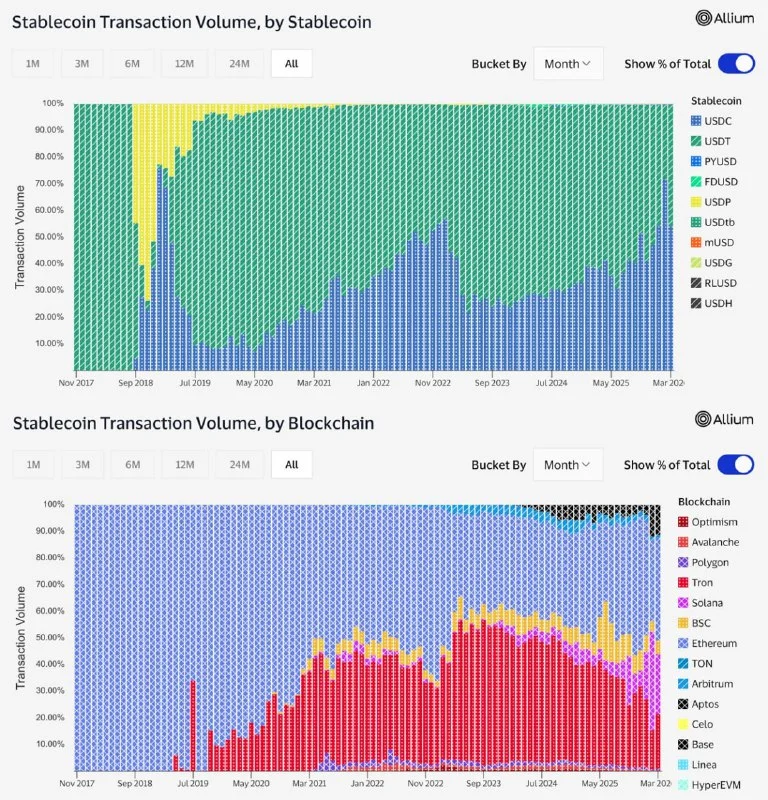
So here's what nobody's talking about with this whole USDC-dethroning-USDT narrative. The headlines are screaming about a changing of the guard, but they're missing the point. This isn't a story about stablecoins. It's a story about network gravity. For weeks, I've been watching the exchange netflows on Glassnode every morning, and the trend is undeniable: capital is not only choosing a new dollar proxy, it's choosing a new home. And while the crypto fear and greed index today sits comfortably in neutral territory, I see a massive capital rotation happening under the surface.
Let’s be real. I’ve been skeptical of Tether’s reserves since 2018. That bear market taught me to trust on-chain data, not attestations. The shift to USDC, which now accounts for over 50% of all stablecoin transactions, is a deliberate move by larger players towards regulatory clarity and transparency. This isn't retail FOMO; this is institutional capital seeking a safer harbor. Circle’s alignment with U.S. regulations makes USDC the path of least resistance for funds that can't afford to play games with their treasury.
This isn't just a preference; it's a fundamental change in market structure. We're moving from a pseudo-offshore, opaque system (USDT on Tron) to a more regulated, on-shore standard (USDC on Ethereum). And that has massive implications for where value will accrue next. My analysis shows this isn't a temporary trend; it's the start of a new chapter.
While Solana still boasts superior speed and lower fees, the massive inflow of regulated capital via USDC is anchoring liquidity on Ethereum. For investors prioritizing stability and access to deep DeFi markets, Ethereum currently presents a stronger case for the remainder of 2026. This is the core of the solana vs ethereum comparison 2026 that matters most right now.
The data is clear. As USDC's market share has grown, so has Ethereum's share of stablecoin-related network activity. Why? Because the biggest pools of liquidity, the most battle-tested DeFi protocols, and the highest-value collateral (like staked ETH) are all on Ethereum. As DeFi expert Luna Park would probably agree, deep liquidity is a magnet for more liquidity. It's a feedback loop. While SOL sits at $94.00 struggling to reclaim that critical $100 level, ETH is quietly absorbing billions in stablecoin inflows, building a solid base around $2,300.
Based on these flows, my ethereum price forecast 2026 is becoming increasingly bullish. I added to my core ETH position last week at $2,250. I'm targeting the $3,200 level by Q4. The sheer volume of USDC being minted and used on Ethereum acts as a constant demand driver for blockspace, burning more ETH and reinforcing its 'ultrasound money' narrative. Solana is fast and cheap, yes, but it hasn't won the trust of the big money... yet.
- Stablecoin Gravity: Winner: Ethereum (due to USDC dominance)
- Transaction Speed: Winner: Solana (no contest)
- Transaction Cost: Winner: Solana (by a huge margin)
- DeFi TVL Growth: Winner: Ethereum (capital inflow is outpacing SOL's growth rate in Q1 2026)
It’s funny, I was reading a piece by Jake Morrison on oil prices and Hormuz, and it's a reminder of how different our worlds are. He's watching tankers, and I'm watching USDC minting velocity. But we're both just tracking capital flows. And right now, the most significant flow in crypto is regulated stablecoin capital, and it's flowing directly into the Ethereum ecosystem.
So, my verdict is clear. I'm not selling my SOL bag—it's a great asset for retail-facing apps. But my new capital is going into ETH. The market is rewarding security and regulatory compliance over raw speed. My invalidation point for this thesis would be a major regulatory action against Circle that halts this trend, or if ETH breaks below its 200-day moving average, currently around $1,950. Until then, the smart trade is to follow the money.
For the next 6-12 months, the winning trade isn't the fastest chain, but the most trusted one. And right now, institutional capital trusts Ethereum.
Everyone is cheering for USDC’s transparency, but are we just swapping the opaque risk of Tether for the centralized risk of a U.S.-based entity? What happens when the issuer, not the code, becomes the single point of failure?