

📣 Create Blog for Traders!
Stop Watching news - Start Making it.
START

TRON Scam Token Warning: What This Means for DeFi Security 2026
A new 'FBI verification' scam on TRON is making waves, but the real threat isn't just the scammers. My analysis shows a deeper problem.
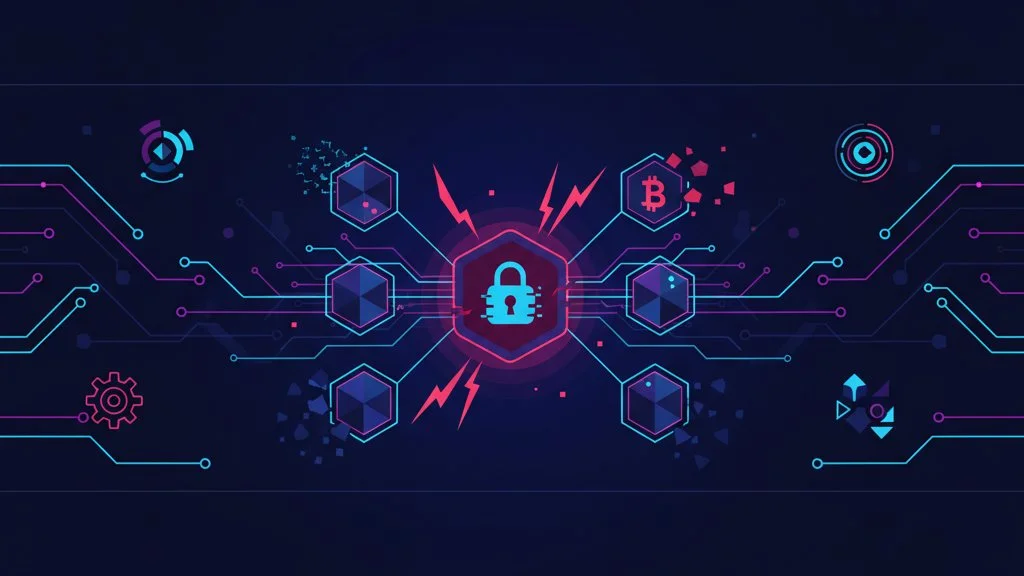
Last time I saw this level of FUD around an alleged official entity token, and the subsequent confusion it caused, was back in 2020. I remember it vividly; I was farming YAM at 3 AM, those were wild times, and the whole space felt like a digital Wild West. Fast forward to today, March 20, 2026, and we're seeing another variant of this play out with an 'FBI scam token' on TRON, promising 'verification' or funds frozen. Everyone's shouting about TRON's vulnerabilities, but honestly, they’re missing the bigger picture here. This isn't just about a scam on a specific chain; it's a stark reminder of fundamental user education gaps and the murky waters of regulatory involvement in crypto. While Marcus Cole might be focused on the daily price swings—like Bitcoin's $70,487.00 or Ethereum's $2,136.87—I'm looking at the underlying mechanics and what this means for a truly DeFi yield farming strategy safe and sustainable ecosystem.
The news hitting the wires this week is pretty straightforward: bad actors are sending messages, often on Telegram, alleging that your wallet is 'under investigation' and demanding a 'verification' via a malicious link. Fail to comply, and your funds on TRON will allegedly be frozen. The FBI has rightly warned that they don't do this. My initial reaction? This isn't a TRON-specific vulnerability in the protocol itself. It’s a classic phishing and social engineering attack, plain and simple. I've been burned by three rug pulls in my time, so I know a thing or two about suspicious contracts and deceptive tactics. This isn’t a smart contract exploit; it’s exploiting human psychology. While TRON has its critics, blaming the chain for users clicking malicious links is like blaming the internet for email scams. The on-chain data, when I checked it this morning, shows typical scam token distribution patterns – low liquidity, no real utility, and a quick dump by the deployer. It's a sad reality, but this kind of attack can happen on *any* blockchain, from Ethereum to Solana. The focus should be on how users interact with dApps and messages, not just the underlying tech.
Here's what the crowd is truly missing, and why this story is more complex than it appears: the FBI itself isn't exactly a neutral observer in this space. Remember 2024? The FBI actually created its own token on Ethereum, 'The NexFundAI Token,' and then engaged companies for 'illegal manipulations,' which led to charges against 4 crypto companies and 14 individuals. This isn't just some vague anecdote; it happened. So, when the 'FBI' is invoked in a scam, and then the *real* FBI warns against it, it creates a deeply confusing narrative for the average user. How can people discern legitimate warnings from scams when government bodies themselves have dabbled in creating tokens for covert operations? This blurs the lines for what constitutes the Alex Volkov would agree that state actors creating tokens for 'illegal manipulations' is a far more insidious problem than some phishing attempt. It undermines trust in *all* institutions, not just the decentralized ones. This directly impacts the adoption of what could become the best DeFi protocols 2026 by eroding public confidence.
So, how do we protect ourselves when the lines are so blurred? It comes down to individual diligence. If you can't read the audit, you shouldn't invest. Here’s my quick checklist, which I run through daily before touching anything new heading into Friday's close:
This brings me to my favorite topic: RWA tokenization. This is the bridge between TradFi and DeFi that actually makes sense. When we talk about real world asset tokenization explained properly, we're talking about verifiable, tangible assets backing digital tokens. This transparency inherently combats some of the 'trust me, bro' issues that plague scam tokens. My 20% allocation to RWA tokens in my portfolio isn't just a bet on future growth; it's a bet on verifiable assets mitigating some of these systemic trust issues. Imagine if every digital asset claimed to be an 'FBI verification' token was actually backed by a verifiable, audited treasury. We’d still need smart contract security, but the core claim would be auditable on-chain.
My thesis that this TRON scam is primarily a user education and broader regulatory confusion problem, rather than a systemic TRON flaw, would be invalidated if we saw evidence of a core TRON protocol vulnerability being exploited by this specific scam. If, for instance, the TRON Virtual Machine itself was somehow compromised to freeze funds without user interaction, that would be a different story entirely. But what we’re seeing is social engineering. It would also be invalidated if legitimate government agencies consistently and openly used similar deceptive tactics, making it impossible to differentiate real warnings from scams.
The greatest scam isn't the token itself; it's the erosion of critical thinking in the face of fear and the blurring of lines by those who claim to protect us.
Ultimately, the responsibility rests on us as users to be vigilant. This incident, while concerning, serves as a powerful reminder for constant due diligence in crypto. What are *your* thoughts on who bears the greater responsibility for these types of scams – the scammers, the platforms, or the users themselves? Let me know in the comments.