

📣 Create Blog for Traders!
Stop Watching news - Start Making it.
START


Crypto Inflows Surge: My Prop Firm Plan to Trade It Safely
Coinshares data shows a flood of cash into crypto, but for a prop firm trader, this is a minefield. Here's how I'm trading the volatility without blowing my account.
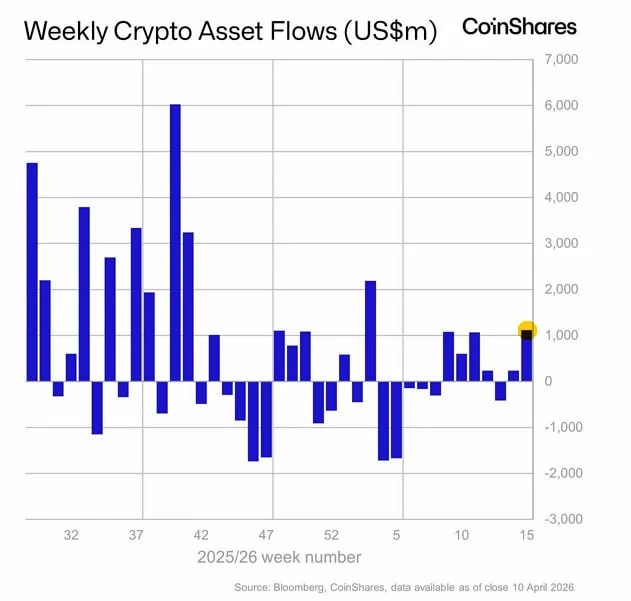
Last week, Coinshares reported a massive surge in crypto inflows. The headlines are screaming 'bull run confirmed,' and everyone on Twitter is posting rocket emojis. I see that data, and my first thought isn't about how high BTC can go. My first thought is: 'How many prop firm accounts is this volatility going to destroy?' As of this morning, with Bitcoin hovering around $70,783, the temptation to chase this pump is huge. But after failing over 20 challenges, I've learned that news like this is usually a trap for the undisciplined trader.
Don't get me wrong, big inflows are fundamentally good. It shows institutional conviction and fresh capital entering the market. But for someone trading on leverage with strict drawdown limits, it's a nightmare. This kind of news-driven price action creates vicious swings in both directions. One minute, you're up 2% on a breakout; the next, a wave of profit-taking liquidates your position and breaches your 5% daily drawdown limit. I learned this the hard way on my first six failed challenges. I was always trying to catch the big move instead of just surviving the day.
This isn't like trading E-mini S&P futures, where moves are often more methodical. A 3% move on $ES is a huge deal. A 3% move on $BTC can happen in five minutes. If you're not prepared, that's your account gone. The psychology here is key, something Emma Blackwood often discusses. The fear of missing out (FOMO) is what prop firms count on to collect challenge fees.
Simple: I'm not playing for the home run. I'm playing for singles. On my funded accounts with FundedNext and TopStep, my goal is consistent income, not a lottery ticket. This means small, high-probability scalp trades that respect my daily loss limit. Chasing a breakout to pass a challenge is a losing game. The real, repeatable approach is a solid prop firm risk management rules-based system.
- My Entry: I'm looking for dips to key intraday levels, like the $70,200 support area. I'll wait for price to dip below the 15-minute 21 EMA and then reclaim it—that's my signal.
- My Risk: Absolute max of 0.5% of my account per trade. My stop-loss would go just below the recent swing low, maybe at $69,950. Non-negotiable.
- My Target: I'm targeting a 1.5R or 2R profit. If I'm risking 250 points, I'm looking to take profit around $70,850 or $71,100. Get in, get out, protect the capital.
This is the boring but profitable core of my personal FTMO challenge strategy 2026. It's not about predicting the next big move; it's about executing a plan with an edge, over and over. You manage risk, the profits take care of themselves. I have a massive spreadsheet tracking every firm's rules, and this low-risk strategy keeps me safe from violating any of them, especially the tricky daily drawdown rules.
I'm not a perma-bear, but I am a professional skeptic. For me to switch from scalping to a swing-trading bias, I need to see more than just one week of inflow data. I need to see price action confirm the story the capital flows are telling.
My line in the sand is a clean daily candle close above the $72,500 resistance zone. Not just a wick, but a solid close with strong volume. Until that happens, I consider this entire area from $68k to $72k to be a choppy range. It's a scalper's market. I learned a lot about waiting for confirmation from watching Viktor Reyes and his commodity calls. He has the patience to wait for the market to prove his thesis, a skill that could have saved me thousands in my early days. He'd likely agree that chasing a move before it's confirmed is just gambling.
The prop firm challenge isn't about proving you're a great trader. It's about proving you can follow a very strict set of rules for 30 days. The profit target is secondary.
The other piece of the puzzle is what happens after the inflow. I want to see this new capital stay in the market. That means watching for sustained exchange outflows, which signals investors are moving coins to cold storage for the long haul, not just flipping them for a quick profit. That's the real sign of conviction.
For a prop firm trader, the biggest danger isn't a market crash—it's a rule violation. Many traders see a flashy 'prop firm payout proof review' on YouTube and think it's easy money. What they don't see is the trader who lost their funded account because they held a trade through a CPI report, violating a news trading rule. I once lost a $100k challenge account instantly because I forgot a firm had a 2-minute rule around FOMC and my stop loss was hit inside that window. A $500 lesson I'll never forget.
So while the crypto market is buzzing, I'm spending my morning routine double-checking the rules for the accounts I'm trading today. What are the crypto spreads? Are there any restrictions on holding over the weekend? The real money in prop firm trading comes from consistent payouts, not one lottery ticket win. The inflows are just noise until you have a plan to trade it that fits within your firm's rulebook. So, is using a prop firm account to trade crypto during peak volatility a smart strategy for income, or is it just a faster way to lose your challenge fee?