

📣 Create Blog for Traders!
Stop Watching news - Start Making it.
START


Hormuz Oil Fears Are a Trap. Here's My Real Trade.
Everyone is piling into the 'long oil' trade on Middle East news. They're about to learn a very expensive lesson in second-order effects.
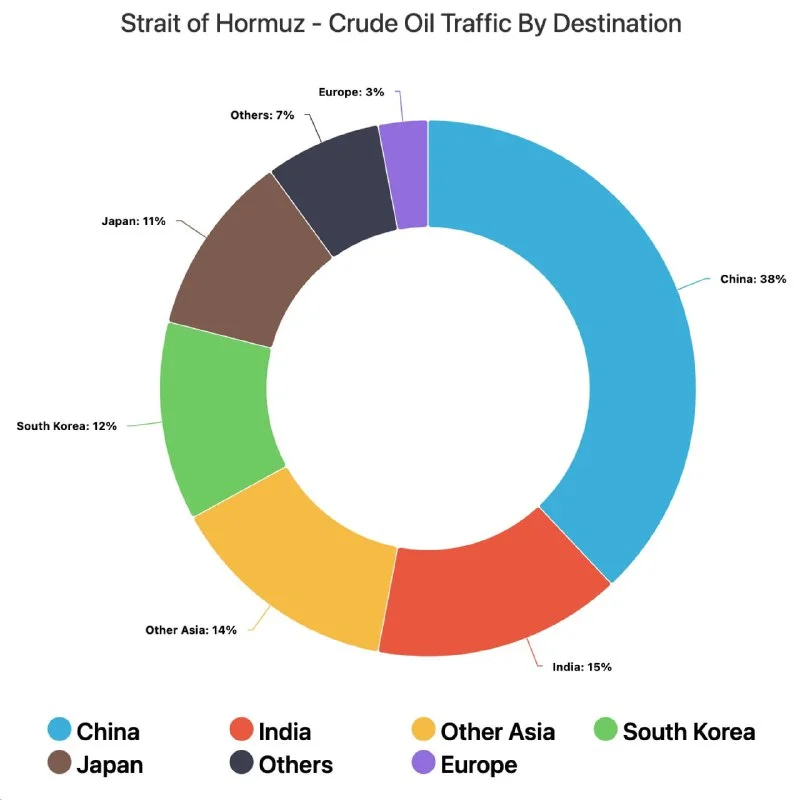
So here’s what nobody’s talking about. Every time there's a flare-up near the Strait of Hormuz, the screens light up green for crude oil and every amateur with a Robinhood account piles in. They see headlines about China, India, and Japan's dependence on that chokepoint and think it's a one-way bet. It's lazy. And it's wrong. I've been watching this play out since I was a runner on the floor in Chicago. The initial spike is pure emotion. The real money is made on what comes next. My crude oil price analysis suggests this rally is built on sand.
The consensus trade is to go long WTI (CL1!) on any hint of conflict. The logic is simple: 20% of the world's oil flows through Hormuz, so any disruption equals a supply shock. True. But that’s first-level thinking. What the crowd misses is that the biggest customers—China, Japan, South Korea, India—are also the world's manufacturing hubs. A sustained oil price over $100 a barrel isn't just a headache for them; it's a potential economic heart attack.
This isn't some mythical commodity super cycle narrative that people love to push. This is basic economics. When the input costs for the world's factories skyrocket, they don't just absorb it. They pass it on, raising global inflation, or they shut down production. Both outcomes lead to the same place: demand destruction. The very thing that caused the price spike—a supply shock—ends up killing the demand needed to sustain it. I learned this the hard way when I blew up my first account on a rogue natural gas trade. You have to think two steps ahead.
I'm not buying this crude rally. In fact, I'm looking for spots to short it. My contacts in the shipping industry are already telling me about reduced orders for future delivery out of Asia. They're getting nervous. While a macro analyst like Emma Blackwood might focus on the inflationary impact, I'm focused on the growth hit. A global slowdown is deflationary for commodities in the long run.
- WTI Entry: Looking to short any spike into the $98-$102 zone.
- Stop Loss: A weekly close above $105 makes me reconsider. That signals the market is ignoring demand risks.
- Target: A reversion back to the low $80s once the panic subsides and the demand reality sets in.
So where does the money go? Not into tech stocks, that's for sure. A global slowdown would crush the growth names Jake Morrison follows. And definitely not into 'digital tulips' like Bitcoin, which still trades like a risk-on asset no matter what the maxis tell you. It goes into the one asset that has been a safe haven for 5,000 years: gold.
The trade is clear: A geopolitical oil spike leads to demand destruction fears, which leads to global slowdown expectations, which forces central banks to pivot dovish. That's rocket fuel for gold. My gold price forecast this week is simple: continued strength. I'm already long a core position in physical gold and adding to my futures position (GC1!) on any dips below $2,340. The path of least resistance is up.
I'm not blind to the risks. This thesis gets wrecked if the Hormuz situation escalates into a full-blown shooting war that physically halts supply for months. In that scenario, oil goes to $150 or higher, and demand destruction doesn't matter in the short term. That's why my stop on the crude short is tight. But I believe the market is overestimating that probability. Most of these flare-ups are just geopolitical posturing.
The amateur trader buys the headline. The professional trader sells the hysteria that follows.
The COT report on Friday will be telling. I'll be watching to see if the commercials (the smart money) are using this spike to build up their short positions. My bet is they are. The question for you is: are you trading the initial emotional reaction, or are you positioning for the inevitable economic reality that comes next?