

📣 Create Blog for Traders!
Stop Watching news - Start Making it.
START


Ag Prices Spike: My Corn & Wheat Fade Trade for Q2 2026
Oil and fertilizer costs are the headline, but the real story is demand destruction. Here's why I'm setting up a short on this overbought rally.
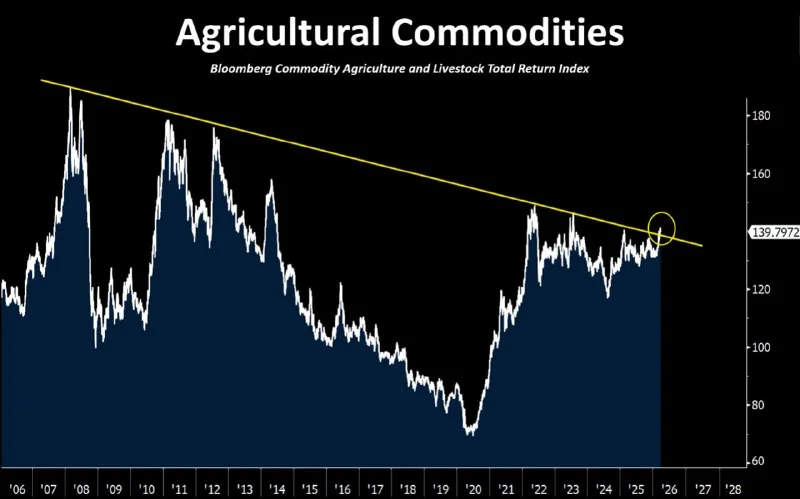
Last time we saw this kind of cost-push inflation rip through the ag markets was late 2021. Everyone piled in, screaming about a new paradigm. They got carried out on a stretcher six months later. Today, I'm seeing the same pattern. The news wire is lit up with surging oil and fertilizer costs, and every rookie is panic-buying Corn (ZC) and Soybeans (ZS). I'm getting my sell orders ready. This isn't the start of a new bull run; it's the final, exhausted gasp of an old one.
The narrative is simple, which is why it's so dangerous. Crude oil (CL) is pushing $95/bbl, which drives up nitrogen fertilizer costs. Simple enough. But my contacts in Houston are telling me refinery runs are peaking and we're due for a seasonal pullback in crude demand. The geopolitical premium is also getting frothy. Jake Morrison correctly pointed out that the Iran war talk is mostly noise, yet oil is priced like ships are already sinking in the Strait of Hormuz. When that premium evaporates, oil could easily drop 10%, and the entire fertilizer cost argument for ags crumbles with it.
Traders are fixated on supply-side shocks from oil and fertilizer costs, forgetting the other half of the equation. High prices destroy demand. Emerging markets, the biggest importers of grain, will cut back purchases or find substitutes, putting a ceiling on this rally much sooner than the bulls expect.
This isn't complicated. When the price of corn gets too high for livestock feed, ranchers switch to cheaper alternatives. When a developing nation can't afford US wheat, they buy lower-quality grain from somewhere else or simply consume less. This rally is happening against a backdrop of shaky global growth. The whole "commodities supercycle 2026" narrative is being misapplied. It makes sense for industrial and precious metals, which are driven by different factors. I'm still adding to my physical gold position, especially with the inflation chatter that Emma Blackwood has been tracking. But for ags? This is a classic overshoot.
I'm a mean reversion trader at heart when it comes to commodities like grain. They get overbought, they get oversold, and they usually come back to the average. Right now, they're screaming overbought. The daily RSI(14) on Corn futures is pushing 75. More importantly, the COT report analysis this week is going to be critical. I'm betting we see Commercials (the smart money, the producers and users of the actual commodity) adding heavily to their short positions. They're hedging, because they know these prices aren't sustainable.
- Asset: Corn Futures (ZC, May contract)
- My Entry Zone: Looking to short between $4.85 - $4.90/bushel
- Stop Loss: A hard stop on a daily close above $5.05
- Target: A move back to the 50-day moving average, currently near $4.50
I'm watching Wheat (ZW) for a similar setup, though it's lagging Corn's rally. If Corn rolls over, Wheat will follow it down. This is a textbook setup of fading public hysteria driven by a simple, but incomplete, news headline.
I'm not married to a position. If I'm wrong, I'm out. The thesis is invalidated by one of two things. First, a real, sustained supply shock—I'm talking a major drought across the US Midwest this summer or a significant escalation in the Black Sea that halts grain shipments. Second, price action. If Corn (ZC) breaks out and we get two consecutive daily closes above my stop at $5.05, the thesis is busted. I'll take the small loss and move on. Blowing up my first account on a stubborn nat gas trade taught me that lesson the hard way. Best $30K tuition I ever paid.
Everyone is chasing the supply narrative in agriculture. The real money will be made fading the overshoot when demand destruction kicks in. Buy the rumor, sell the news.
So while the crowd chases grain futures, I'm watching my levels and waiting for the perfect entry to bet against them. The herd is almost always wrong at the extremes. My question is, am I too early in calling the top, or is the market ignoring the most fundamental rule in economics: the cure for high prices is high prices?