

📣 Create Blog for Traders!
Stop Watching news - Start Making it.
START


Bitcoin's Quantum Threat: Why I'm Not Selling My BTC Yet
Adam Back is right to sound the alarm on quantum computing, but the immediate threat isn't what you think. Here's my DeFi-focused take.
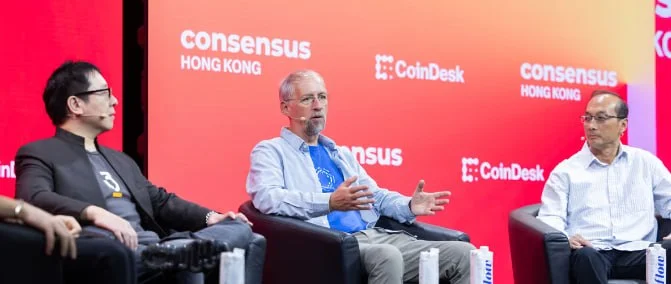
Last time we saw a major existential FUD cycle like this was back during the block size wars. Everyone screaming that the sky was falling. Today, the boogeyman has a new name: quantum computing. After Blockstream CEO Adam Back's comments this week—and the NYT's wild claim that he's Satoshi—the topic is all over the timeline. Marcus Cole wrote a great piece on why the Satoshi news is mostly noise, and I agree. But the quantum threat? That's got legs, just not in the way most people think.
Let me be clear: I'm not selling my BTC. It's still a core holding for me, even with Bitcoin hovering at $71,530. The threat isn't a Bond villain hacking the entire blockchain overnight. The real, more insidious risk is a slow erosion of institutional trust that could cripple the very protocols we're building for the future. I've been reading post-quantum cryptography whitepapers for fun—yes, really—and the on-chain implications are way more nuanced than a simple 'hack'.
First, let's get the technicals straight. The threat comes from an algorithm called Shor's algorithm, which, on a powerful enough quantum computer, could break the Elliptic Curve Digital Signature Algorithm (ECDSA) that secures Bitcoin wallets. But there's a huge catch. It can only derive your private key from your public key. And in Bitcoin, your public key isn't exposed until you spend from that address for the first time.
This means your hodl addresses (specifically P2WPKH or Taproot addresses where the pubkey isn't revealed) are safe. The vulnerability window is tiny—it's the few minutes between when you broadcast a transaction (revealing your public key) and when it gets confirmed in a block. A quantum computer would have to see your transaction in the mempool, derive the private key, and broadcast a conflicting transaction with a higher fee to steal your funds, all before the next block is mined. It's theoretically possible, but practically absurd with today's technology.
- Vulnerable: Re-used legacy P2PKH addresses where the public key is already on-chain.
- Less Vulnerable: Modern SegWit/Taproot addresses on the first spend.
- Safe (for now): Unspent addresses and the SHA-256 hashing algorithm itself.
This is where my real concern lies. I spend my days analyzing protocols, and the entire $100B+ DeFi ecosystem is built on the assumption of base-layer security. When I'm looking at a project, the first thing I do is read the audit. But no audit can protect against a compromised L1. The bigger issue is long-term settlement. If you're talking about a serious discussion on real world asset tokenization explained for things like 30-year mortgages or 100-year corporate bonds, you need a 100-year security guarantee. A vague, decade-out quantum threat is a non-starter for that level of institutional adoption.
It changes the entire risk calculation. Suddenly, the security of a protocol isn't just about its own smart contracts, but about the long-term viability of the chain it's built on. This is where a deep **restaking protocols comparison** becomes critical, as projects like EigenLayer are fundamentally about extending and leveraging the base-layer security of Ethereum. But what if that base layer itself has a question mark over it in a 15-year time horizon? It's a conversation that needs to happen now. I'd love to see a security expert like Alex Volkov do a deep dive on the hardware-level race between quantum offense and cryptographic defense.
Frankly, no. Bitcoin's slow, deliberate, and contentious upgrade process is a feature for monetary stability but a bug for technological agility. A transition to post-quantum cryptographic standards (like CRYSTALS-Dilithium) would require a network-wide hard fork, making the SegWit or Taproot debates look like a friendly chat over coffee. The political capital required would be immense.
This is why I remain overweight on ETH (currently 40% of my portfolio) and the broader smart contract ecosystem. Ethereum's proven ability to execute complex, network-wide upgrades like The Merge gives me more confidence that it can adapt to the quantum threat when the time comes. Bitcoin's ossification is its greatest strength and its greatest long-term risk.
So, what's my play? I'm holding my core positions in BTC and ETH. But my experimental allocation (about 10%) is increasingly focused on what I call 'quantum hedges'. This means I'm looking at new L1s and projects experimenting with novel cryptography or showing a clear path to PQC agility. My current airdrop farming strategy 2026 is less about chasing yield and more about gaining exposure to these next-gen ecosystems. If one of them gets the PQC narrative right, it could be a 100x winner, providing a nice hedge against stagnation in the legacy players.
The invalidation for my 'don't panic' thesis is simple: a verifiable, peer-reviewed breakthrough in stable qubit architecture from a major state actor or corporation like Google or IBM. If that happens, the timeline accelerates from a decade to a few years, and all bets are off. Until then, the bigger risk is getting rugged by a project with a multi-sig controlled by one person.
For the next five years, the biggest risk to your portfolio is a bad smart contract, not a bad quantum algorithm. Read the audits.
Ultimately, Adam Back is doing the responsible thing by starting the conversation. It's a real, long-term problem. But for now, I'm more worried about poorly designed tokenomics and unaudited code. It leads me to wonder, if a quantum-resistant hard fork of Bitcoin were proposed tomorrow, would the community accept the trade-offs in transaction size and complexity, or would we see another crippling scaling war?