

📣 Create Blog for Traders!
Stop Watching news - Start Making it.
START


That $200k Bitcoin Miner? A Warning, Not a Strategy
Everyone loves a lottery winner, but chasing solo mining glory is a surefire way to burn your capital. Here's where the real alpha is.
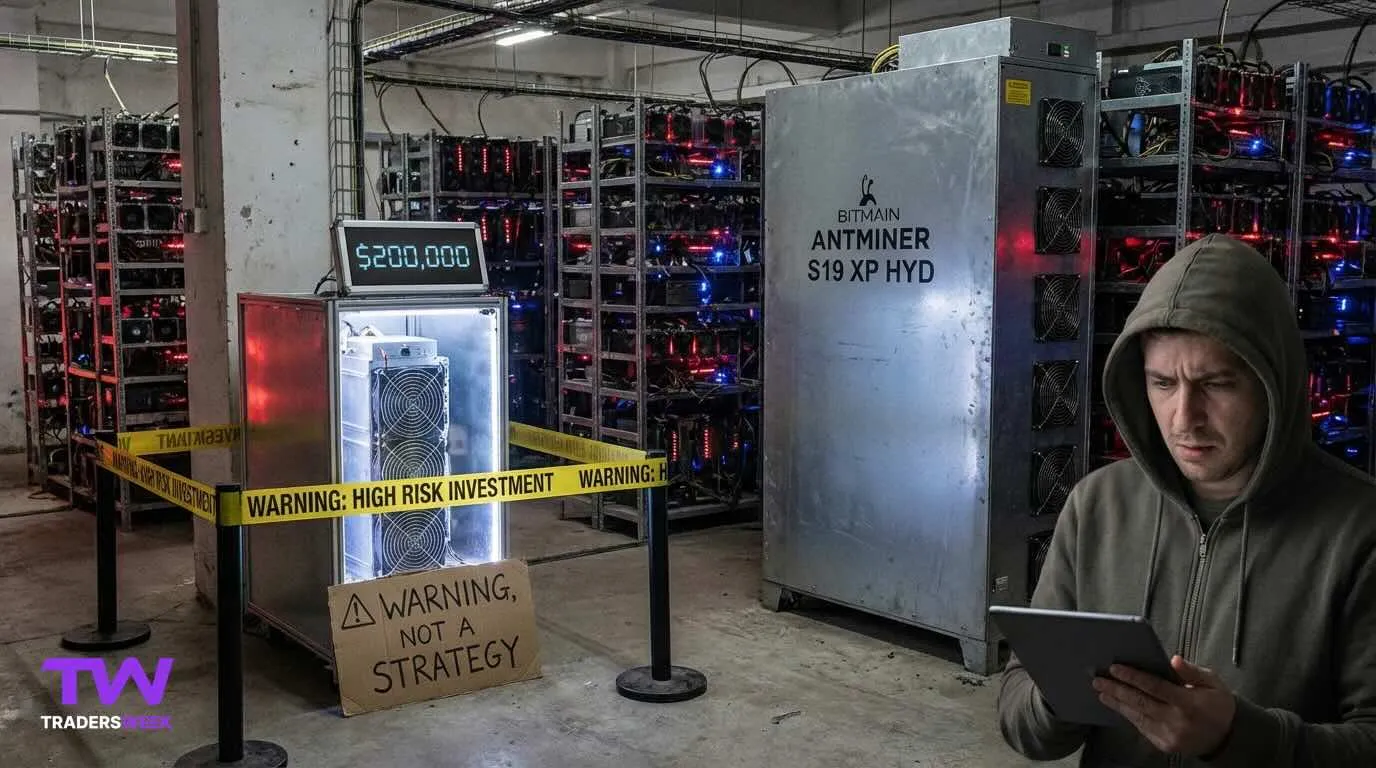
Is this week's viral story about a solo miner turning $75 into $200,000 the new crypto dream? Let me be direct: absolutely not. It’s a statistical anomaly, a brilliant but unrepeatable stroke of luck. While it's a fantastic headline, treating it as anything more than a lottery win is a dangerous misinterpretation of how the Bitcoin network actually functions. I've been burned by enough protocol exploits to know the difference between a calculated risk and pure gambling. This was gambling.
Let’s break it down. The miner rented about 1 PH/s of hashrate to find block #938092. The total Bitcoin network hashrate is currently hovering around 600 EH/s. That means this miner controlled roughly 0.00016% of the network's total power. The odds of them finding the next block were astronomically low. It happened, which is amazing for them, but it’s not a business model. While my colleague Marcus Cole is probably charting what this news does for BTC sentiment, I'm more concerned with the underlying risk model it presents to retail. It's a siren song.
- Your Rented Hashrate: ~1 PH/s
- Total Network Hashrate: ~600,000 PH/s
- Your Chance of Success: Roughly 1 in 600,000 per block
- The Real Strategy: This is not one.
This kind of event reinforces my core thesis. Chasing these moonshots is a distraction. The real, sustainable opportunities are being built with transparent, verifiable code. My time is better spent analyzing the Ethereum DeFi ecosystem, where protocols generate yield from actual economic activity—lending, trading fees, and increasingly, from off-chain cash flows. As Alex Volkov covers the big macro picture, I'm on the ground, in the code, looking for protocols that can survive a bear market.
My process involves a deep dive into the contracts, almost like a personal smart contract audit guide, before I even consider allocating capital. I'm far more interested in the steady, compounding yield from tokenized real world assets (RWAs) than a one-in-a-million shot on a Bitcoin block. Give me a protocol tokenizing U.S. Treasuries with a verifiable 5% APY over a mining gamble any day of the week. One is a business, the other is a Powerball ticket.
Don't get distracted by the lucky wins. The future of crypto investing is in protocols with auditable code and real-world cash flows, not lottery tickets.
So while we celebrate the anonymous miner's incredible luck, let's not fool ourselves into thinking it's a path to follow. It’s a fun story, but it’s not where the smart money is going. Has the crypto space become too obsessed with jackpot stories over sound, fundamental investment principles?