

📣 Create Blog for Traders!
Stop Watching news - Start Making it.
START


Brent Crude at $115 Is a Trap: I'm Shorting This Spike
Most traders are panic-buying the Iran headlines. The G7 reserve release is the real signal, and it's screaming 'sell'. Here's my trade plan.
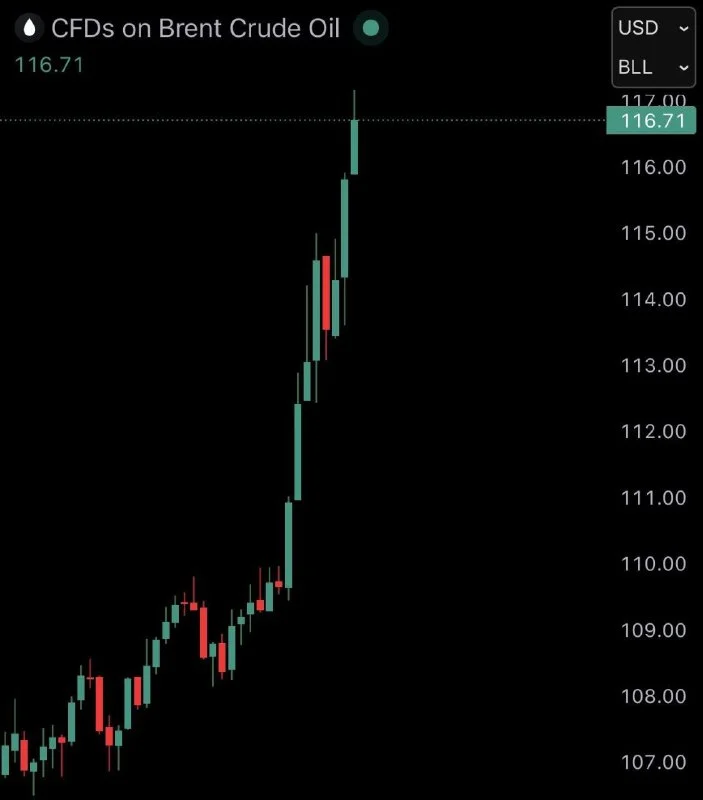
Let's get one thing straight. Brent crude jumping 25% to over $115 isn't a signal to mortgage your house and go long. It's a trap. I'm calling it right now: this is a classic blow-off top fueled by headlines and weak-handed speculators. While everyone is chasing the pump, I'm building a short position. The chatter about a G7 coordinated reserve release isn't a sign of panic; it's the opening shot in a war against these prices, and my money is on the central banks. This isn't some 'digital tulip' market like my friend Marcus loves; this is physical supply and demand, and the supply side is about to get a shock.
Most traders are wrong about Strategic Petroleum Reserve (SPR) releases. They see it as a last-ditch effort. I see it as a weapon. I've tracked every major OPEC and G7 decision since 2016 in a spreadsheet, and the pattern is clear: coordinated releases are designed to break the back of a speculative frenzy, not just to add barrels. The Iran nuclear threat is the convenient headline, but my contacts in Houston say the physical market isn't nearly as tight as $115 suggests. This move is about managing inflation expectations and punishing speculators who got over their skis. The latest Commitment of Traders report confirms this—Managed Money net long positions are at multi-month highs. That’s fuel for a fire to the downside.
The market is buying a headline. I'm selling the reality. This isn't a supply crisis, it's a manufactured squeeze, and the G7 is about to pop it.
This setup reminds me of the natural gas trade that blew up my first account. A parabolic move on a scary headline. The best $30K tuition I ever paid taught me to sell these, not buy them. So, here's my plan for the BZ futures contract, plain and simple. I'm not waiting for confirmation; I'm acting now.
- Entry Zone: I started scaling into a short position at $114.50. I'll add more if we see a failed retest of $116.
- Stop Loss: My hard stop is above the overnight high at $117.25. If I'm wrong, I want to be out fast. No exceptions.
- Target 1 (Mean Reversion): A quick flush down to the $105 area, which was the breakout point.
- Target 2 (Full Retracement): If the G7 announcement has teeth, we could see a complete gap fill down to $98 by the end of the month.
My position size is calculated so that a hit on my stop loss costs me no more than 1.5% of my account. Risk management is the only reason I'm still in this game.
While oil grabs the headlines, the smart money is rotating. Precious metals dipped today, and that's the real opportunity. My commodities market outlook is simple: oil is volatile and subject to political whims, while gold is the true bedrock. The selloff in gold is a gift. I'm using the liquidity from my oil short to add to my physical gold position. People looking for a solid gold price forecast this week should see this dip as a loading zone, not a warning.
When it comes to a gold vs silver investment during geopolitical turmoil, gold is the undisputed king. Silver has a much larger industrial component, making it sensitive to economic slowdowns which often follow energy shocks. Gold doesn't have that problem. It's pure monetary refuge. While traders like Emma Blackwood might see value in broader macro plays, I keep it simple: in times of fear, buy the yellow metal. It's a much cleaner trade than trying to guess the next move of some tech stock that Jake Morrison might be covering.
I'm not infallible. This trade goes wrong if two things happen. First, if the Iran situation escalates from threats to actual military action that disrupts the Strait of Hormuz. That would be a genuine, sustained supply shock, and my $117.25 stop would get hit fast. Second, if the G7 announcement is a dud—a token release of a few million barrels that the market shrugs off. That would signal the bulls are still in control. That’s why the stop is non-negotiable. I trade my plan, not my pride.
So, as we head into the G7 meeting, the lines are drawn. The headlines are screaming for higher prices, but the underlying mechanics are pointing to a sharp reversal. What's the more powerful force: a news-driven panic or millions of barrels of government-held oil aimed squarely at the longs?