

📣 Create Blog for Traders!
Stop Watching news - Start Making it.
START


Japan's Toilet Paper Panic is My Buy Signal for Gold 2026
Forget the headlines. The real story from Japan is a classic fear indicator, and it's pointing straight at hard assets. Here's my trade.
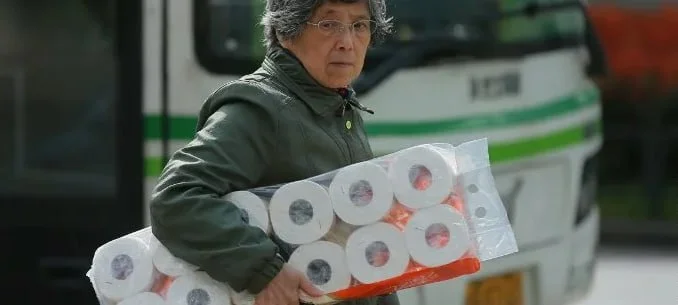
Japan's government is telling its people not to hoard toilet paper because of tensions in the Middle East. Most traders will dismiss this as a quirky headline. They're wrong. This is the loudest risk-off signal I've seen all quarter. When the public starts panic-buying essentials, it's a direct echo of the 1973 oil crisis. The fear is real, it's visceral, and it's not priced into the market... yet.
When governments have to tell you not to panic, the smart money is already buying insurance. For me, that insurance is spelled G-O-L-D.
This isn't just about pulp and paper logistics. It's a barometer of public anxiety about supply chains. My contact who charters VLCCs out of Rotterdam told me Friday that insurance premiums for tankers passing through the Strait of Hormuz are up 22% in March alone. That's not noise; that's the market pricing in a real possibility of closure. While crypto traders are focused on on-chain metrics, the real world is sending smoke signals. Macro analysts like Emma Blackwood get this; a real supply shock would make current inflation look like a rounding error.
I'm already long Gold (GCJ26) from $2250. I added to my position on Thursday's dip. The chart is textbook trend-following, and this geopolitical fear is the fuel. My gold price forecast this week is a test of $2400/oz. I'm also stalking a long in WTI Crude (CLJ26). I'm not chasing it here at $102, but I have a bid ready to buy a pullback.
- Gold (GCJ26) Target: $2450/oz
- Gold (GCJ26) Stop-Loss: Below $2280 (the weekly 21 EMA)
- Crude (CLJ26) Buy Zone: A dip to the $98.50 support level
This isn't a short-term trade. Every one of these geopolitical flare-ups reinforces the case for the commodities supercycle 2026. Underinvestment in production meets escalating global risk. It's a perfect storm. While stock traders like Jake Morrison are worried about what high energy prices will do to corporate margins, I'm focused on the source. The primary trend is owning the things that get pulled out of the ground.
My thesis gets invalidated by one thing: a sudden, credible de-escalation in the Middle East. If we see a major diplomatic breakthrough, the fear premium evaporates, and crude could drop $10 overnight. That's my risk. Until then, I'm holding my hard assets and letting the fear trade run.
So while others are watching Bitcoin's dance around $70,000, I'm watching shipping lanes. In a real crisis, which asset do you really want to own?