

📣 Create Blog for Traders!
Stop Watching news - Start Making it.
START


My DeFi Mistake: Ignoring Bitcoin's $58,000 Magnet
I lost 12% on a 'safe' yield farm because I was too focused on protocol fundamentals and ignored Bitcoin's macro dominance. Here's the lesson.
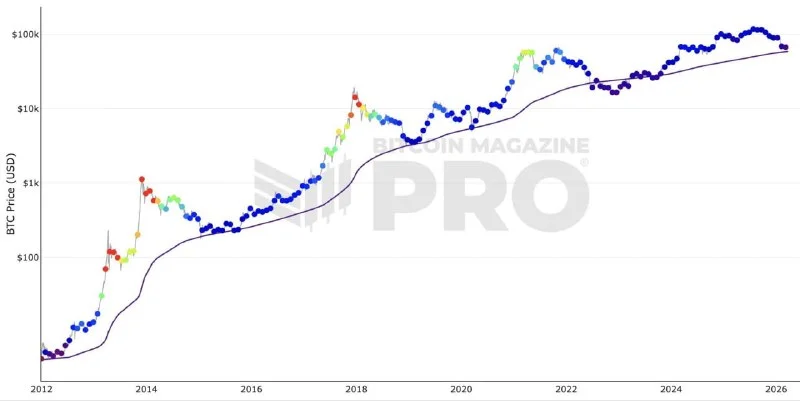
I lost 12% of my farming position in 48 hours last month, and it had nothing to do with a smart contract hack or a rug pull. The protocol's code was perfect. I’d read the audit reports myself—twice. The Total Value Locked (TVL) was climbing steadily. But I made a rookie mistake: I got so deep into my Ethereum DeFi TVL analysis that I completely ignored the big orange gorilla in the room, Bitcoin. While I was celebrating a protocol's fundamentals, the broader market was screaming a warning I chose to ignore.
The setup was, on a micro-level, flawless. I was yield farming a new RWA protocol tokenizing treasury bills. The on-chain data was pristine: TVL growing at 15% week-over-week, a clear and concise tokenomics model, and a publicly-doxxed team. I ran through my entire smart contract security audit checklist: multiple audits from reputable firms, a bug bounty program in place, and governance behind a 48-hour timelock. It felt like the kind of asymmetric bet I live for. I allocated a small, but not insignificant, portion of my experimental portfolio to it, farming the native token against ETH.
The problem is, no DeFi protocol is an island. While I was focused on the micro, Marcus Cole was probably pointing out the bearish divergence on the BTC/USD 4-hour chart. He lives and breathes price action, while I'm usually buried in Etherscan. I saw the choppy consolidation around $70,000, but I figured my protocol's superior fundamentals would insulate it from minor market turbulence. I was wrong.
Bitcoin didn't just sneeze; it caught a cold. A sharp 8% drop over two days sent shockwaves through the market. ETH followed, plunging from over $2,200 to nearly $2,000. My perfectly-audited, fundamentally-sound yield farm position? It got wrecked by impermanent loss. The protocol's native token sold off harder than ETH, and my LP position value plummeted. That 12% loss was a painful reminder that in crypto, every asset is effectively a high-beta play on Bitcoin, at least for now.
This isn't just about impermanent loss. A sharp BTC move stresses the entire DeFi stack. Liquidations on lending platforms like AAVE spike, creating downward pressure. Stablecoin pools on Curve can become imbalanced as traders flee to safety. The whole system's liquidity tightens. My mistake was isolating one protocol from the interconnected system it operates within. This is why I'm now paying very close attention to Michaël van de Poppe's analysis about a potential retest of the 200-week moving average, currently sitting around $58,000.
A truly DeFi yield farming strategy safe from market volatility is a myth. However, you can make it safer by acknowledging macro risks. My new approach mandates a top-down analysis before any bottom-up protocol dive. I won't enter a new farm unless my thesis for Bitcoin is at least neutral-to-bullish for the intended holding period.
- Macro First: What is Bitcoin's position relative to key moving averages (50W, 200W)?
- Stress Test IL: Model my potential impermanent loss against a -20% BTC drawdown.
- Systemic Risk Check: Analyze on-chain leverage and liquidation levels across major protocols.
- Protocol Fundamentals Last: Only after the macro checks out do I apply my smart contract audit checklist.
Your DeFi alpha is worthless if you get the direction of Bitcoin wrong. Macro dictates everything.
So, am I scared of the $58,000 retest? Not at all. I'm preparing for it. I've taken profits on most of my experimental farms and rotated into stables. My core positions in ETH, AAVE, and MKR remain untouched—I'm a long-term believer. But I'll be looking to deploy that dry powder if and when we see that macro support test. As Alex Volkov often notes about market psychology, maximum fear is often the point of maximum opportunity. A dip to the 200-week MA would be a generational buying opportunity for DeFi blue chips, in my opinion.
This experience was a costly but valuable lesson. You can't just be a protocol analyst; you have to be a market analyst. So, I have to ask: at what point, if ever, will the fundamentals of a protocol like Ethereum truly allow it to decouple from Bitcoin's price action?