

📣 Create Blog for Traders!
Stop Watching news - Start Making it.
START


Crypto's Real Threat Isn't Price, It's Policy 2026
While everyone watches Bitcoin's chart, the failure of the CLARITY Act poses a long-term risk to DeFi and RWA innovation. Here's what I'm watching.
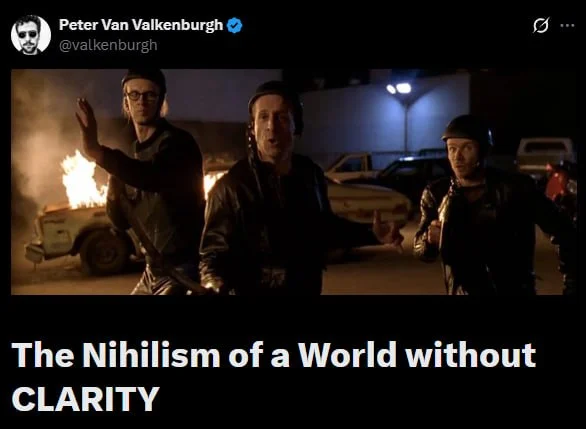
The market spent all last week glued to the Bitcoin chart, celebrating a hold above $66,000. But the most important event didn't happen on-chain. It happened in a statement from Coin Center's Peter Van Valkenburgh, and almost everyone is getting its implications wrong. His warning about the CLARITY Act's failure isn't just another piece of FUD. I see it as a fundamental, long-term risk that could kneecap the entire DeFi and privacy sector. While Marcus Cole is probably charting the next resistance level for BTC, I'm more concerned about the foundation everything is built on.
Sure, we saw some chop. Bitcoin flirted with $67k before settling around $66,500, and Ethereum is struggling to reclaim $2,000. But this price action is a distraction. The real story is the growing regulatory ambiguity in the US. Van Valkenburgh is right: a world without legal guarantees for developers is one governed by fear. I was farming YAM at 3 AM during DeFi Summer 2020, and I can tell you, innovation thrives in freedom, not in the shadow of potential prosecution. This isn't theoretical; it's a direct threat to the builders.
- BTC Support: Watching the $64,800 level closely this week.
- ETH Resistance: The big psychological barrier remains $2,000. A firm break is needed.
- DeFi TVL: Currently sitting at $95.4B according to my dashboard. That's a lot of capital operating in a legal grey zone.
The failure of the CLARITY Act means developers of decentralized software have no statutory shield. This makes building open-source financial tools incredibly risky, as they could be held liable for how others use their code. This directly threatens privacy protocols and the core ethos of DeFi, pushing innovation offshore or underground.
This is where it really hits my portfolio. I've been bullish on Real-World Asset (RWA) tokenization for years—it's the bridge we need. But how can you tokenize a Treasury bond or a real estate deed on-chain if the developers of the smart contract could face prosecution? It injects a massive amount of counterparty risk. My list of RWA tokenization projects to watch is getting shorter, favoring those with strong legal frameworks in friendlier jurisdictions. This uncertainty makes a proper smart contract security audit checklist even more critical; you're not just auditing the code, but the existential risk to its creators.
It also complicates things like a restaking protocols comparison. These systems are already incredibly complex. Adding the variable of 'will the core developers be targeted by a future administration?' makes risk modeling nearly impossible. After being burned by three rug pulls in my early days, I learned to check contract ownership and team anonymity—this regulatory risk is just a macro version of that same lesson.
My main thesis heading into Q2 2026 is that capital in DeFi will slowly rotate towards protocols that offer some semblance of legal protection. This means projects with established Foundations (like the Ethereum Foundation I used to contribute to), fully doxxed teams, and clear governance structures. I'm talking about the DeFi blue chips: AAVE, UNI, and especially MKR. Their decentralized governance isn't just a feature; it's a potential legal defense. This isn't just a crypto trend; it's a macro one. As Alex Volkov often points out, government action—or in this case, inaction—creates powerful long-term headwinds that no chart pattern can predict.
My allocation reflects this conviction. I’m holding my 30% allocation to DeFi blue chips firm and reducing exposure to more experimental, anonymous projects until we get more clarity. I'm not selling everything, but I'm definitely not deploying fresh capital into the riskiest corners of DeFi right now.
The market is pricing in the next CPI print, but it's completely ignoring the risk of the next DoJ indictment. That's the asymmetry I'm focused on.
This isn't a call to panic, but a call to be realistic. Reading audit reports for fun has taught me one thing: the biggest risks are often the ones hiding in plain sight, not in the complexity of the code. Right now, the biggest risk is written in legal documents that don't exist yet. Are we, as an industry, sacrificing the future of decentralized innovation for short-term trading gains by ignoring these foundational legal battles?