

📣 Create Blog for Traders!
Stop Watching news - Start Making it.
START


Hedge Fund Short Squeeze: A Trap or a Buy Signal? (2026)
Hedge funds are covering shorts at a record pace. I'm breaking down whether this is a true bullish signal or just clearing the deck before a drop.
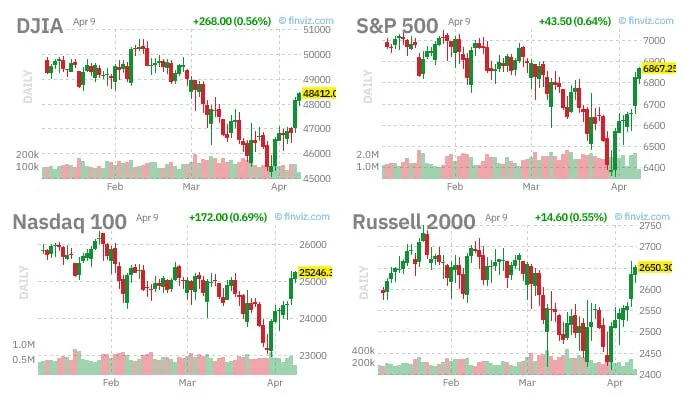
I almost made a mistake this week. Seeing the choppy price action and listening to the endless debate about the Fed's next move, I was tempted to build out a few tactical shorts in some of the frothier names in the Nasdaq. My fundamental work showed stretched valuations. But then the Goldman Sachs positioning data hit my screen Thursday morning, and I paused. It showed hedge funds were covering their shorts in US equities at the fastest pace in six years. A move like that isn't just noise; it’s a signal.
The headline is dramatic: the largest 4-week short covering since 2020. On the surface, this looks bullish. Fewer sellers, right? But from my experience, a violent unwind like this is often a sign of pain, not conviction. The consensus trade was to be short or underweight equities, and it hasn't been working. This isn't necessarily managers turning bullish on fundamentals; it's them being forced out of losing positions. The VIX holding stubbornly above 18 tells me the underlying fear hasn't vanished, it's just been temporarily overpowered by a positioning squeeze.
The bull case is that this forced buying creates its own reality. As shorts are squeezed, they have to buy back shares, pushing prices higher and squeezing even more shorts. It's a feedback loop that can lead to a face-ripping rally. However, this has all the hallmarks of what my colleague Jake Morrison would call a classic trader's trap. It feels good, it looks powerful, but it's built on a weak foundation of forced positioning rather than new, organic buying. I'm not chasing this move. I'm using it as an opportunity to reassess.
So, where is the money going? While the short covering is grabbing headlines in tech and discretionary sectors, my focus is on the quiet rotation happening underneath. This is where a solid sector rotation strategy 2026 comes into play. I'm trimming my high-beta growth exposure and adding to quality, defensive names. I've been building a position in Utilities (XLU) and Healthcare (XLV). Their earnings are less correlated with the economic cycle, and they offer stable cash flows. While someone like Alex Volkov is watching the macro picture for policy shifts, I'm digging into the 10-Ks to find the best dividend stocks to buy 2026 — companies that can weather a storm if this rally proves to be a mirage.
- S&P 500 (SPX) at 5,350: This is the key psychological level. A firm hold above it could extend the squeeze. A failure here would be a major red flag.
- Russell 2000 (IWM) vs. Nasdaq 100 (QQQ): Small caps have been a favorite short target. If the IWM starts to outperform the QQQ, it suggests the short covering is broad and has legs.
- 10-Year Treasury Yield: I need to see this stay below 4.40%. If yields start creeping back towards 4.50%, the justification for higher equity valuations evaporates fast.
This isn't a fundamental 'all-clear' signal. It's a positioning unwind. The smart money isn't chasing the squeeze; they're rotating into quality underneath the surface.
My core thesis remains that the market is punishing the consensus trade. The path of maximum pain was to squeeze the bears, and that's what we're seeing. The real question is what happens after the pain subsides. So, is this short-covering rally just the market clearing out the bears before the real move down, or are we witnessing the painful start of a new leg up?