

📣 Create Blog for Traders!
Stop Watching news - Start Making it.
START


A 14.75% Yield Is a Warning for S&P 500 Growth Stocks
A Russian bond auction just flashed a major warning sign for global rates. Here's how I'm positioning my portfolio and why value is the only play right now.
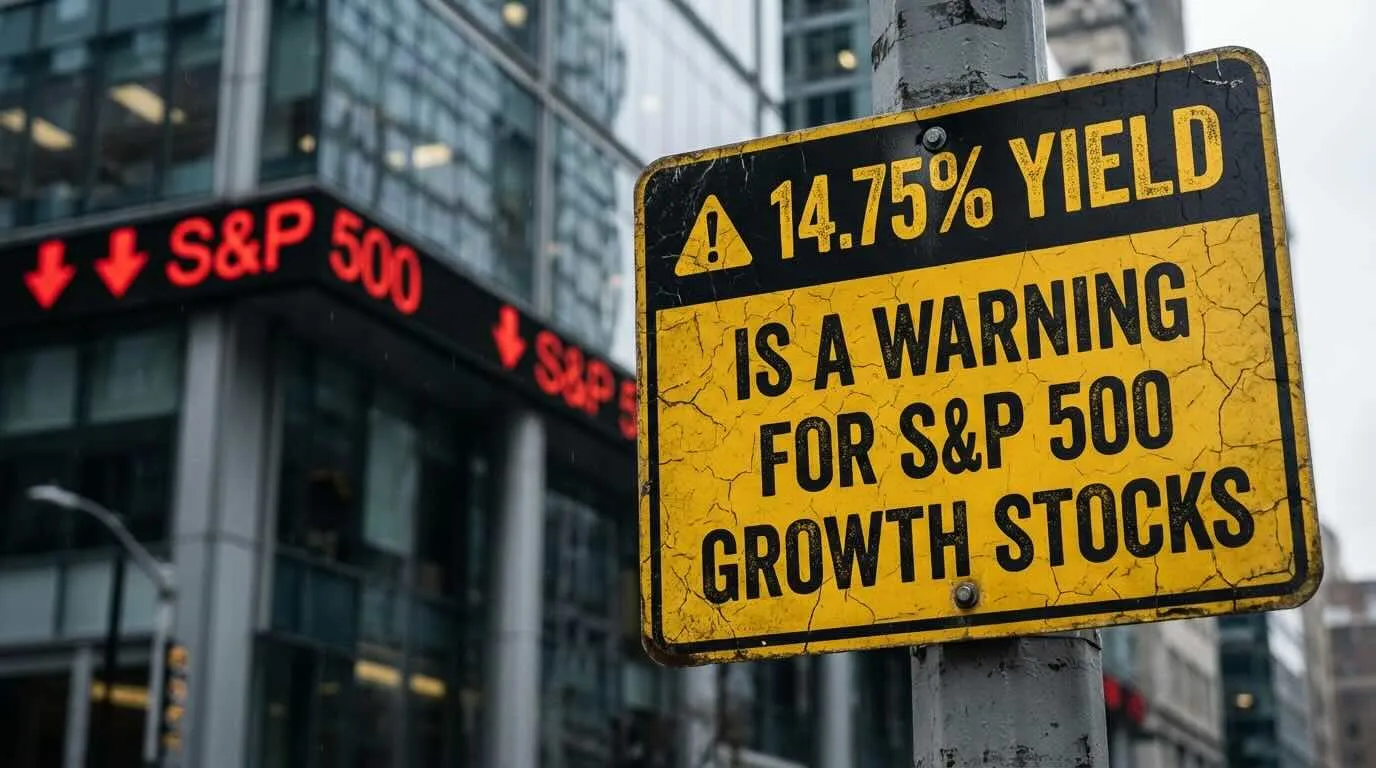
The bond market is sending a clear message that equity investors are choosing to ignore: the real cost of capital is much higher than we think. While the S&P 500 flirts with all-time highs, I was watching something else entirely this morning. Russia's Ministry of Finance placed bonds yielding a staggering 14.75%. This isn't just some esoteric data point; it's a canary in the coal mine for global inflation and rate expectations, and it's directly impacting my S&P 500 price forecast for the rest of the year.
Last week ended with a tech-led rally, pushing the Nasdaq higher and making everyone feel like the bull run was back on. But the placement of Russian OFZ 26252 bonds for 102.21 billion RUB at that yield tells a different story. Strong demand (136.77 billion RUB) at such a high rate shows there's a global chase for yield because holding cash is a losing game. But it also shows that governments have to pay up to borrow. This pressure isn't isolated. It eventually finds its way into all risk assets, including US stocks. It makes the US 10-year yield at 4.25% look deceptively low.
This macro overlay informs my key levels for the S&P 500 (SPX) this week. I'm less concerned with chasing momentum and more focused on where the real support lies if the market wakes up to rate reality.
- Key Resistance: 5,450. This is the psychological barrier and recent high.
- Initial Support: 5,340. The 21-day EMA needs to hold here.
- My Line in the Sand: 5,250. A break below this level suggests a deeper correction is underway.
In an environment where a major economy's sovereign debt yields nearly 15%, the conversation around growth stocks vs value stocks becomes incredibly simple. The discount rate used in my DCF models gets cranked way up. Future earnings, especially for companies that are years from profitability, become worth dramatically less. Cash flow today is king. This is a tough environment for the story-driven stocks that my colleague Jake Morrison often finds success with. For my money, the focus has to shift to the best blue chip stocks with fortress balance sheets and pricing power.
I've been building a position in healthcare, and JNJ is my pick for this environment. It's the definition of a defensive value play. Their products have inelastic demand (people need medical devices regardless of interest rates), they have a solid 3.2% dividend yield, and trade at a forward P/E of around 14.5x. This is a business that generates real, predictable cash. It's the kind of fundamental story you find digging through a 10-K, not by chasing chart patterns. While someone like Alex Volkov might be looking for a fast-moving breakout, I'm looking for stability in a shaky macro landscape.
- Entry Zone: $148.00 - $150.00
- Stop Loss: A weekly close below $144.00
- Profit Target: $165.00 (re-evaluate on approach)
My value-focused thesis gets thrown out the window if we see a string of surprisingly low CPI and PPI reports. If inflation truly has been vanquished and the Fed signals aggressive cuts, then long-duration growth stocks will scream higher, and defensive plays like JNJ will underperform. But I don't see that happening. The global bond market is telling a story of persistent inflation, and I've learned the hard way not to fight the bond market. It's usually the smartest guy in the room.
In a world where you can get 14.75% from sovereign debt, a company's ability to generate real cash today isn't just a feature; it's the only thing that matters.
Ultimately, the equity market can remain irrational longer than I can remain solvent, but the fundamentals always win out. That OFZ auction was a data point, but it's part of a mosaic that points toward a tougher environment for the high-flyers. So, is the S&P 500's resilience a sign of strength, or is it the final act of denial before repricing to a higher-rate world?