

📣 Create Blog for Traders!
Stop Watching news - Start Making it.
START


MSTR vs BMNR: Which Corporate Crypto Bet is Smarter?
Everyone cheers for MicroStrategy's Bitcoin buys, but a quieter company's Ethereum strategy might be the real genius move for corporate treasuries.
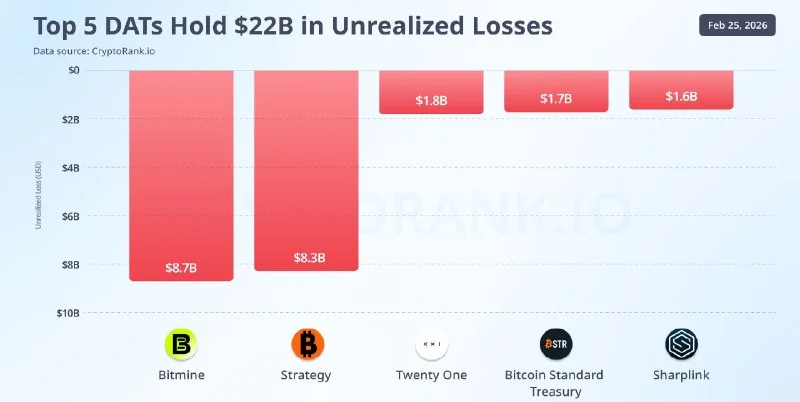
Let's be honest, everyone loves to watch Michael Saylor and $MSTR stack sats. It’s a bold, simple bet. But focusing only on the unrealized losses of the biggest corporate Bitcoin holder misses the more interesting story. There's a smarter corporate treasury play happening, and it involves the world's largest corporate buyer of Ethereum, $BMNR. While my colleague Marcus Cole is probably glued to the $BTC chart waiting for the next leg up, I'm looking at the on-chain data. And that data tells me one of these strategies is built for the future, while the other is stuck in the past.
MicroStrategy's thesis is dead simple. They believe Bitcoin is a superior store of value to fiat currency, and they've used debt to acquire over 200,000 $BTC. It's a pure inflation hedge. A bet on digital scarcity. From a TradFi perspective, it’s easy to understand. You buy an asset, you hold it, and you hope it appreciates. There's no complex mechanism here. It's a balance sheet diversifier designed to protect purchasing power. The risk? Bitcoin's volatility. Their entire strategy hinges on the price of $BTC going up. Period. There's no yield, no utility beyond being a settlement network. It just sits there, like a pile of digital gold bars in a vault.
Now, let's look at BitMine. Their big bet is on $ETH. This is a fundamentally different approach. I got into this space during the 2020 "DeFi Summer"—I was farming YAM at 3 AM, so I know a productive asset when I see one. Ethereum isn't just a store of value; it's a decentralized world computer. Holding $ETH means holding a piece of that computer. It's a capital asset that can be put to work.
Think about it. BitMine can stake its $ETH to earn a native yield, currently around 3-4% APY, just for helping secure the network. They can use it as pristine collateral in DeFi protocols like Aave or Maker to borrow against. This is where we see the beginnings of true `institutional DeFi adoption`. An ETH-based treasury isn't static; it's dynamic. It can generate cash flow. This is a universe away from just holding $BTC and praying.
When you put them side-by-side, the strategic differences are stark. It's not just about which coin goes up more. It’s about what a corporation can *do* with the asset.
- Asset Type: MSTR holds a non-productive Store of Value (SoV). BMNR holds a productive, yield-bearing capital asset.
- Yield Potential: MSTR's $BTC has zero native yield. BMNR's $ETH can be staked for network rewards.
- Utility: MSTR's asset is purely monetary. BMNR's asset is the fuel for a global smart contract and settlement layer.
- Strategy Complexity: MSTR's is a simple buy-and-hold. BMNR's strategy allows for active treasury management to generate returns.
Even with the macro headwinds that Alex Volkov correctly points out, a yield-bearing asset like $ETH offers more strategic flexibility. In a high-rate environment, an asset that can generate its own return becomes incredibly attractive. This is the core of the `best DeFi protocols to invest` in—they leverage productive assets, and ETH is the king.
For my money, the BitMine strategy is vastly superior in the long run. Why? Capital efficiency. A corporate treasury's job is to make the company's capital work for it. A static asset that relies solely on appreciation is a speculative bet. A productive asset that can be staked, lent, and used as collateral is an active tool for value creation. The future of finance is tokenization. And when you need `RWA tokenization explained`, it boils down to putting real-world assets on a programmable blockchain. That blockchain is, for all intents and purposes, Ethereum. Holding the native asset of the world's dominant smart contract platform is a bet on the entire digital asset ecosystem, not just one coin.
Bitcoin is a fantastic bet against the old financial system. Ethereum is a bet on the *new* financial system. I'll take the new system every single time.
So while the headlines focus on MSTR's paper losses or gains, I'm watching the quiet build-out of a much more sophisticated treasury strategy. It requires more expertise, sure. You can't just buy and forget; you have to understand the tech. But the potential payoff is a dynamic, cash-flow-positive treasury that's integrated with the future of finance. So I have to ask: if your company had to put $100M onto its balance sheet today, would you rather own a digital rock or a digital factory?