

📣 Create Blog for Traders!
Stop Watching news - Start Making it.
START


Trump's Iran Oil Threat: My Crude Trade for Q2 2026
Headlines about seizing Kharg Island are grabbing attention, but the real oil trade is hiding in plain sight. Here's how I'm fading the noise.
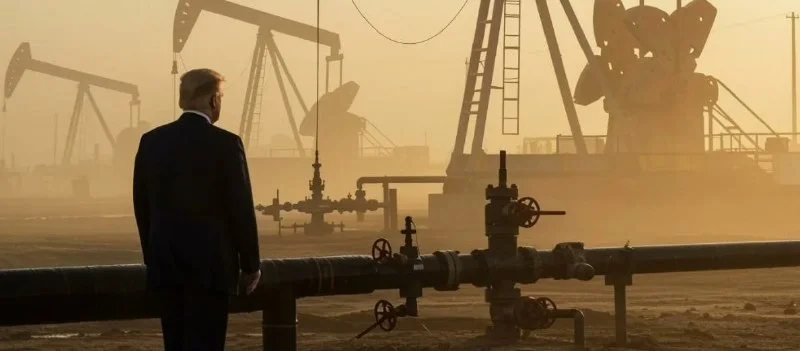
The wires lit up this morning with Trump's interview in the FT, openly talking about seizing Iranian oil and controlling Kharg Island. The knee-jerk reaction is a spike in the geopolitical risk premium. WTI (CL) jumped 1.2% in the overnight session on the news. Most traders see this and think 'long oil'. They're wrong. This is election-year noise, not a shift in supply fundamentals.
My position is clear: I'm looking to short this headline-driven pop in crude. The real story isn't what a candidate says, but what OPEC is actually pumping.
Let's get real. The idea of the U.S. Navy 'taking' Kharg Island is a logistical and military fantasy. It's not Venezuela. Kharg Island is the loading point for about 90% of Iran's crude exports, sitting right in the Persian Gulf. Any military action there would mean an immediate closure of the Strait of Hormuz, through which 20% of global petroleum liquids pass. The result wouldn't be cheap oil for the U.S.; it would be $200/bbl crude and a global depression. This isn't a strategy; it's rhetoric designed to sound tough. The market is reacting to the soundbite, not the reality. That's our edge.
This is political noise, not a credible supply threat. Any actual move on Iranian assets would require congressional approval and would instantly spike oil prices against the politician's goal. The market should be focused on OPEC+ quota compliance and signs of demand destruction in Asia, not campaign trail bravado. This is a classic fade setup.
My contacts in the Gulf are telling me a different story. They're seeing quiet non-compliance from a few OPEC members struggling with their budgets. They're pumping a little extra on the sly. My spreadsheet, which tracks every OPEC decision since 2016, shows that discipline frays when prices sit above $80 for a full quarter. We're there now. Combine that with weakening economic data out of China, and the fundamental picture for crude looks heavy. This is the kind of macro view that Emma Blackwood has been correctly highlighting for months now.
The trade is clear: short crude oil futures (/CL) into this strength. The headline gives us a better entry price. I'm not going all-in on day one; this is about scaling into a position as the market comes to its senses. For those looking for solid futures trading strategies for beginners, this is a classic: fade the emotional reaction, trade the underlying numbers. This isn't about being a hero; it's a calculated risk, a concept Jake Morrison covers well in his posts on risk management.
- Asset: WTI Crude Oil Futures (/CL)
- Action: Short
- Entry Zone: $83.50 - $84.25/bbl
- Stop Loss: A daily close above $85.50
- Target: $78.00/bbl (retest of the March lows)
My thesis rests on the idea that the market will realize this is rhetoric, and the gravitational pull of a weakening supply/demand balance will take over. The pop above the 21-day EMA is the selling opportunity I've been waiting for.
My thesis is dead wrong if this escalates beyond words. If Iran responds by, say, harassing tankers in the Strait of Hormuz, this geopolitical premium will not only stick, it will explode higher. A direct attack on a U.S. asset in the region would also invalidate this short immediately. That's why the stop loss at $85.50 is non-negotiable. I learned my lesson blowing up my first account on a Nat Gas trade years ago—you always define your exit before you enter.
This is why I keep 20% of my portfolio in physical gold. It’s my hedge against precisely this kind of black swan geopolitical event that no chart can predict. Forget digital tulips; hard assets are the only insurance when things get truly chaotic. So, has the market permanently lost the ability to distinguish between a politician's tweet and an actual change in barrels produced?