

📣 Create Blog for Traders!
Stop Watching news - Start Making it.
START


Miner Selling & DeFi: Why I'm Buying This BTC Dip 2026
Public miners sold a record 32,000 BTC in Q1, but my on-chain analysis shows this isn't bearish. It's a massive opportunity for DeFi yields.
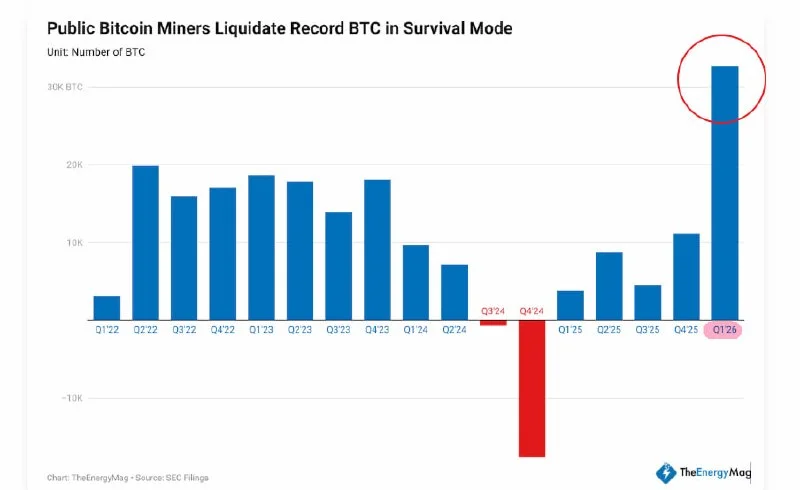
This record miner selling isn't the bear signal everyone thinks it is; it's the institutionalization of Bitcoin creating the best on-chain yield opportunities I've seen since I was farming YAM at 3 AM back in the DeFi Summer of 2020. The headlines are screaming about public miners selling over 32,000 BTC in the first quarter of 2026, but they're missing the real story entirely. This isn't panic, it's professionalism, and it's fueling the next wave of DeFi growth.
Last week's data drop showed Q1 miner sales topped all of 2025 combined. On the surface, that looks terrifying. But having been burned by enough rug pulls, I've learned to always check the on-chain data and contract ownership before reacting. Miners aren't rage-quitting. They're acting like mature, publicly-traded commodity producers. They sell to cover massive operational expenses (opex), fund next-gen hardware upgrades (capex), and de-risk their treasuries. This is sophisticated balance sheet management, a world away from the forced liquidations we saw during the 2022 crash.
The crucial question is: where is all this BTC going? My analysis of on-chain flows reveals it’s not primarily hitting retail exchanges like Coinbase or Binance. Instead, a significant portion is being absorbed into institutional-grade custody solutions and, more importantly, being wrapped into WBTC to be deployed in DeFi. This is the real institutional DeFi adoption news that people are sleeping on. The supply is meeting a massive, latent demand from funds looking for productive on-chain assets.
Yes, but not just for spot exposure. The real opportunity is using this new liquidity in DeFi. With $75,000 acting as a psychological floor, the influx of miner BTC is pushing down borrowing rates and boosting yields on blue-chip protocols. This is creating a prime environment for a safe DeFi yield farming strategy safe enough for even cautious capital to explore. The game has changed from pure price speculation to sustainable yield generation.
- Major Support: $72,500 (Previous week's low and liquidity zone)
- Psychological Level: $75,000 (Current consolidation base)
- Key Resistance: $78,800 (Q1 High)
- My End-of-Month Target: $85,000+
While Marcus Cole is probably drawing trendlines on the 4-hour chart, I'm digging into Aave V3's smart contracts to see how this new liquidity is affecting utilization rates. The on-chain data is far more telling than an RSI reading right now. The increased supply of WBTC on lending platforms is lowering the cost to borrow against it. My primary strategy is to supply my long-term ETH holdings, borrow stablecoins like USDC at a favorable rate (currently sub-2% APR on Aave), and then deploy those stables into RWA-tokenized treasury bill protocols, which are some of the best DeFi protocols 2026 for stable yield.
This is the bridge between TradFi and DeFi I've been talking about for years. It's a strategy that even macro analysts like Alex Volkov would appreciate, as it capitalizes on global liquidity flows seeking safety and yield. We're moving from a purely speculative market to one where Bitcoin is a pristine collateral asset generating predictable cash flow. That’s a fundamental paradigm shift.
My thesis hinges on this BTC supply being absorbed by institutional and DeFi demand. If that changes—if my dashboards suddenly show a massive, sustained flow of miner BTC to centralized exchange hot wallets—I'll immediately reconsider. That would signal distribution to retail, not institutional accumulation, and would invalidate my entire bullish case. The other constant risk is smart contract failure. I read audit reports for fun, but no protocol is 100% bulletproof. That's why I stick to battle-tested blue chips like Aave and Compound for the bulk of my DeFi portfolio.
Forget the spot price for a minute. The real alpha is in the second-order effects: how this record BTC supply is being absorbed by DeFi protocols and creating sustainable yield.
As we head into the weekend, the market is fixated on the $75,000 price tag. I'm focused on the WBTC minting rate on the Ethereum blockchain. One is noise, the other is the signal. So, are you just watching the price chart, or are you looking at where the smart money is actually putting its capital to work?