

📣 Create Blog for Traders!
Stop Watching news - Start Making it.
START


S&P 500 Tests 5,600: My Strategy for This Key Channel
The market is testing the lower bound of a critical long-term channel. I'm not panicking, I'm preparing. Here's my step-by-step plan.
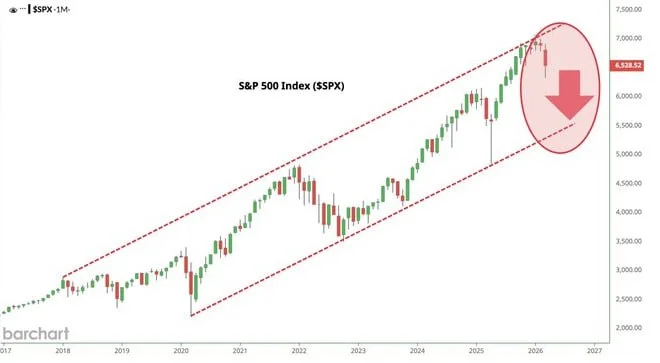
The VIX closed yesterday at 14.2. For an index supposedly testing the lower bound of a multi-year channel near S&P 500 5,600, that feels... incredibly complacent. The chatter on the desk is all about 'Operation Epic Fury', a term I suspect is some fund's internal name for a major rotation. While everyone is drawing lines on a chart, I'm digging into the fundamentals to see if this is a floor or a trap door. My entire career, first at Goldman and now on my own, has been about separating signal from noise, and right now, the noise is deafening.
Let's be clear. A long-term channel isn't magic; it's a visual representation of the market's risk appetite over time. The lower bound at 5,600 represents a point where, historically, buyers have seen value and stepped in. But past performance is no guarantee. The macro backdrop is murky. We saw Q4 2025 GDP come in at 2.9%, a slight miss, and core PCE inflation is stubbornly hovering around 3.1%. The Fed is sidelined, and the market is looking for its next catalyst.
This 'Epic Fury' talk suggests institutions aren't just selling; they're aggressively repositioning. This isn't panic. It's calculated. They're likely trimming high-beta tech that ran too far and rotating into value or more defensive names ahead of the earnings season preview Q1 2026. My read is that this isn't a broad market dump, but a violent churning under the surface. It's the kind of environment where stock pickers, not indexers, can really shine.
This is the critical question. A bounce here could set us up for a run to new all-time highs, while a break could trigger a rapid 5-10% correction. The bull case is simple: the channel has held for years, valuations in some sectors have cooled, and corporate balance sheets are still largely healthy. The bear case, which my friend Alex Volkov would probably lean into with his global macro view, is that sticky inflation and slowing growth is a toxic mix the market hasn't priced in yet.
My model suggests a break of the channel would find its first major support at the 200-week moving average, currently around 5,250. That's a significant drop. For now, I'm giving the channel the benefit of the doubt, but I'm not buying indiscriminately. I'm looking for signs of confirmation before adding significant risk.
This isn't about timing the market perfectly. It's about having a plan. When a key level like this is in play, I revert to a simple, repeatable process. It's the same discipline I used managing risk on the trading floor.
- Validate the Level: I'm watching for a bounce on high volume. A weak drift upwards on low volume is a red flag. I also want to see the VIX stay below 18. A sharp spike above 20 tells me fear is taking over.
- Review Allocation: I still hold my core 60% large-cap allocation. However, I've trimmed my 30% growth bucket by a third, raising cash. I'm avoiding adding to my 10% speculative plays until we see a decisive bounce.
- Identify Hedges: I've bought some June puts on the QQQ. It's a small position, an insurance policy. A momentum trader like Jake Morrison might just cut his losers and sit in cash, but my strategy is to protect the core portfolio while staying in the game.
- Prepare the Buy List: A breakdown isn't a disaster if you're prepared. I have a list of high-quality companies I'd love to own at a discount. This is where I'm looking at specific AI stocks to buy now, but only those with actual earnings and fortress balance sheets—no story stocks.
So, what am I actually doing? I am a net long, but a cautious one. I'm holding my blue-chip dividend payers and have used the recent dip to add a small starter position in Microsoft (MSFT) under $400. My thesis is that the channel holds and we see a grind back towards 5,850 into the summer.
My entire thesis is invalidated if we get two consecutive weekly closes below 5,580 on increasing volume. That isn't a test; it's a structural break. If that happens, I'll cut my recently added tech exposure, sell my remaining growth names, and move to a 50% cash position until the dust settles. You have to know your exit before you ever enter a trade.
Channels are guides, not gospel. The market doesn't owe us a bounce here, but risk-adjusted, the odds favor the bulls until the price action proves otherwise.
Ultimately, this is a moment for patience and planning, not prediction. Everyone is watching the S&P 500 chart. But is the real danger lurking in the high-yield corporate bond market, where spreads have started to quietly widen? Let me know what you're watching.